Hey there, thanks for stopping by to chat about one of the most underrated workhorses in bulk material handling: the gross weighing bagger. I’m Luke, and I’ve been selling these bad boys for almost a decade now—most days, I get asked the same question by plant managers, ops leads, and even the random new maintenance guy who’s never touched one before: “What’s the actual automation level of these things? Are they still just old clunky setups that need a guy hovering over a scale all day?” Gross Weighing Bagger
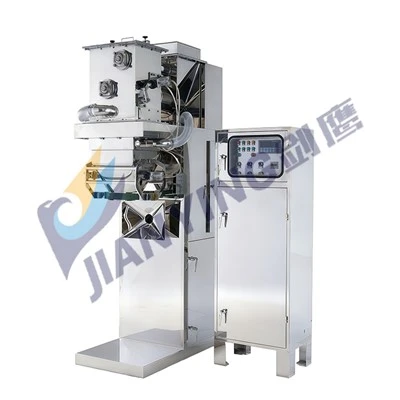
Fair question. I’ve seen so much misinformation online—some guys acting like all gross weighing baggers are either fully automated robot arms or just a guy with a shovel and a eyeballed scale. Let’s cut through the noise, since I deal with this every single day, and break this down real. First, let’s start with the basics so we’re all on the same page: a gross weighing bagger is the machine that fills, seals, and bags bulk material—think fertilizer, plastic pellets, grain, sand, that kind of stuff. Gross weighing means it weighs the entire full bag (product + whatever’s in the bag) instead of taring just the product, which is different from net weighing baggers. But that’s a small detail for today’s convo.
So automation level. Let’s not pretend it’s a one-size-fits-all number. It’s like asking “what’s the automation level of a car?” Some are a 1990s pickup with no power steering, others are a Tesla that parks itself. Same with gross weighing baggers. Let’s break this down into the four main tiers I sell, because that’s what my customers actually see. No jargon, I promise.
Tier 1: Semi-Manual (Low Automation, Like, Barely There)
This is the entry-level stuff we sell for small farms or mom-and-pop material shops that only bag a few tons a day—like less than 10 TPH (tons per hour, for anyone not in the biz). Here’s how it works: an operator stands at the machine, slaps an empty bag onto the spout, hits a start button, and watches as product dumps in. The scale is analog or a basic digital scale that only beeps when it hits the target weight. The operator has to catch the spout, tie or stitch the bag closed, and move it down a line to a palletizer—all by hand. No conveyors, no automated bag handling, no error correction.
Wait, but is this even considered a gross weighing bagger? Yeah, absolutely. The automation level here is like a microwave you have to press every button for. It’s manual, but it has a simple weighing function that replaces the old “scoop and guess” method. Do we sell these? Sure, but only to people who truly don’t have the volume to justify more. Most of the questions I get about low automation are from these small ops—they don’t realize they can bump up the level without ripping out their whole shop.
Tier 2: Semi-Automated (Mid-Level, The Sweet Spot For Most Businesses)
This is what I’d say 70% of my customers go for. Let’s say you’re a mid-sized fertilizer plant or a grain processor bagging 10 to 60 TPH. This setup fixes all the annoying parts of the low-end stuff, but it’s not fully lights-out. What do you get here? First, a automated bag dispenser—no more an operator grabbing empty bags off a stack. The machine pulls one bag, opens the top, and positions it over the spout. That cuts out one big manual task.
Then the weighing system is way more advanced. It’s still gross weighing, but it has a feed gate that switches from a fast fill to a slow fill when it gets within, say, 0.5 lbs of the target weight. That’s critical—no more overfilling because the operator was rushing. The scale uses load cells (not analog springs) so it’s accurate within ±0.1 lbs, which is way better than a human’s eyeball.
Now, the catch: even this tier still needs one operator, maybe two if you’re maxing out volume. Why? Because you still have to have someone take the full bag, put it on a pallet, replace the pallets when full, and fix jams. Wait, but the sealing? Most mid-level baggers have automated sealers—either heat seal for woven plastic or stitchers for paper bags. That cuts out the tying part. The only manual stuff is the “end of line” work.
Here’s a common mistake I see customers make: they think mid-level is fully automated, but it’s not. The automation level here is about 60-70% if you’re rating it on how much manual labor it cuts. The key features here are repeatability—no two bags are off by more than a few ounces, which is huge for consistency, especially if you’re selling by weight. I recently sold a mid-tier setup to a guy who used to have 3 guys working 12-hour shifts bagging feed for cows; now he has 1 guy, and they bag 3x as much. That’s the automation level working for him.
Tier 3: Fully Automated (High Automation, For High-Volume Ops)
This is the stuff for facilities bagging over 60 TPH—think big grain elevators, chemical plants, companies that ship thousands of bags a day. I’ve set up a handful of these for customers like regional fertilizer co-ops, and the automation here is next level. Let’s walk through how it works, because it’s wild compared to the old days.
First, the line is integrated with conveyors that handle everything: empty bags are fed, positioned, opened, and placed on the spout all by robotics or servo motors. No operator touching a bag until it’s full. The weighing system is super precise—we use high-resolution load cells that can adjust for material density changes mid-fill. If a batch of plastic pellets is a little more compact than the last, the scale tweaks the fill speed to make sure each bag hits exactly the target weight, no over or under. That’s a big deal because underfilling leads to complaints, overfilling wastes product.
Then, after filling, the bag is sealed—either heat sealed, stitched, or even taped, all automated. Then it’s moved to a checkweigher, which is another automated scale that double-checks the weight. If a bag is off even a tenth of a pound, it gets kicked off the line automatically, no human needed. Then it’s labeled—barcodes, lot numbers, whatever you need, printed and applied in-line. Finally, it’s palletized by a robotic palletizer, stretch-wrapped automatically, and moved to storage or shipping.
Wait, but even this has a tiny manual component? Maybe. Some customers keep a spare operator on hand to fix rare jams, or to swap out big rolls of sealant or labels. But 99% of the time, the line runs with almost no hands-on work. I’d rate this automation level at 90% or higher—lights-out, basically. One of my customers in Iowa runs their fully automated gross weighing bagger 24/7, only having a guy pop in every 4 hours to check the alarm logs. They used to have 8 operators on that shift alone.
Tier 4: Customized Automation (The Niche Stuff)
Okay, I can’t forget this, because some customers have weird needs. Like, if you’re bagging a super fragile material—say, popcorn or crushed glass—you don’t want the spout dumping hard into the bag and breaking it. So we’ll build a customized gross weighing bagger that has a drop height control, so it fills gently, with even higher automation that adjusts the fill speed based on material type. Or if you’re bagging hazardous materials, the line is fully enclosed, and operators are nowhere near the bagger—you control it all from a PLC (programmable logic controller) screen. This is the top tier for specialized use cases, and the automation level is tailored to exactly what the material needs.
Now, let’s talk about the myths I get all the time, because that’s what trips people up. First myth: “Gross weighing is less accurate than net weighing.” No, that’s not true. A good gross weighing bagger is just as accurate—you just have to calibrate it right. The automation level doesn’t make it less accurate; the calibration process does. All our setups, no matter the tier, get calibrated before we ship them, and we train the customer on how to adjust it.
Second myth: “Higher automation means more downtime.” Wait, no—modern gross weighing baggers have way less downtime than the old manual ones. We add sensors that flag issues before they become jams, so the line shuts down for 2 minutes instead of 20. The automated feed gates adjust for wear, so you don’t have to mess with them as much. Do you have to do maintenance? Yeah, any machine needs that, but the automation actually reduces unplanned downtime.
Third myth: “I have to replace my whole line if I want higher automation.” No way. We can upgrade mid-tier baggers. Add an automated bag dispenser, add a conveyor to the palletizer, add the checkweigher. Most of my customers start with a mid-level setup, then upgrade parts as their volume grows, instead of buying a whole new machine. That’s a big selling point for small to medium businesses that don’t want to drop $100k all at once.
Wait, let’s get real about costs, because that’s a big part of the question. If you’re asking “what’s the automation level,” it’s tied to how much you’re willing to invest, and what your volume needs are. A semi-manual gross weighing bagger runs around $15k-$25k, great for less than 10 TPH. Mid-level is $40k-$80k, perfect for 10-60 TPH. Fully automated is $120k+, for 60+ TPH. But the ROI on the higher automation is huge—most customers pay off their bagger in 1-2 years from labor savings alone.
I should also mention the tech side that’s changed automation levels over the last 5 years. Ten years ago, even mid-level baggers needed a guy writing down weights, or adjusting the scale manually. Now, all our setups have cloud connectivity—you can log into your phone or laptop and see exactly how many bags were filled that shift, if any had weight issues, maintenance alerts, everything. That’s a big part of the automation people don’t talk about: data tracking. No more paper logs, no more guessing how your line is performing.
Another thing: error correction. The low-end bagger if it’s off weight? You have to manually adjust the scale. Mid-level adjusts the feed speed automatically if it’s off by a little. Fully automated adjusts for material density, humidity in the air (wait, yeah—if the product you’re bagging is damp, it weighs more, so the scale adjusts). That’s the next level of automation—adaptive, not just set-it-and-forget-it.
Now, who should go for what? Let’s make this concrete. If you’re a small grain farmer bagging seed for local sales, semi-manual is fine, no need to overcomplicate. If you’re a feed mill that sells to regional farms, mid-level is the sweet spot—cuts labor, keeps accuracy, no need for full automation. If you’re a big fertilizer plant shipping state-wide, fully automated is worth the cost, because it’s faster, more consistent, and you don’t have to hire as many people for repetitive work.
I’ve had customers come to me thinking they need to go all in on automation, then realize they only need mid-level. And vice versa—some big companies think they can get by with mid-level, then their volume grows, and they need to upgrade. It’s not a one-time choice; it’s scalable.
Wait, let’s wrap this up so it’s actionable. The biggest takeaway here is that the automation level of a gross weighing bagger isn’t a fixed number. It’s a spectrum, based on your volume, material, budget, and how much manual labor you want to cut. If someone tells you all gross weighing baggers are X level, they’re lying. I’ve built setups that are 40% automated for small operations and 95% for big ones, all under the gross weighing umbrella.
If you’re someone trying to figure out what your operation needs—whether you’re upgrading an old bagger or buying your first one—hit me up. I don’t do sales pitches that pressure you into buying the most expensive stuff. I’ll walk through your volume, your material, your current labor costs, and help you pick the automation level that makes sense for you. No strings attached, just real talk about what works for small, mid, and big operations.
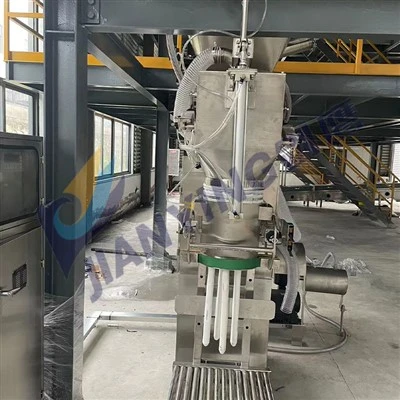
Don’t overcomplicate this. The automation level is there to make your life easier, not to replace you unless you want it to. Let’s chat about what you’re bagging, how much, and we can sort it out.
Net Weighing Bagger References:
- Bulk Solids Handling Association. (2022). "Gross vs. Net Weighing Technologies for Bulk Bagging Operations." Annual Technical Report.
- International Material Handling Equipment Manufacturers Association. (2023). "Automation Scales and Integration for Industrial Bagging Systems." Industry White Paper.
- Food and Agriculture Organization of the United Nations. (2021). "Small-Scale Grain Bagging: Cost-Effective Automation Solutions." Rural Infrastructure Publication Series.
Wuxi Jianying Intelligent Equipment Co., Ltd.
We are one of the most professional gross weighing bagger manufacturers and suppliers in China, featured by quality products and good price. Please rest assured to buy durable gross weighing bagger for sale here from our factory. Welcome to contact us for custom service and OEM service.
Address: No.88, Xinyang Road, Ehu Town, Xishan District, Wuxi City, Jiangsu Province, P.R.China
E-mail: wuxijianying@163.com
WebSite: https://www.wuxijianying.com/
