Alright, let’s cut to the chase—if you’ve ever watched a mobile crane swing a 50-ton steel beam across a construction site like it’s a toy, you might’ve thought, “How hard can that be?” Spoiler: super hard. And if you’re in the market for a mobile crane to add to your fleet or rent out, knowing exactly what kind of training your operators need isn’t just a nice-to-have—it’s non-negotiable. As someone who’s been supplying mobile cranes for over a decade (shoutout to the folks who’ve trusted us with their lift needs), I’ve seen too many guys skip the proper training and end up with costly mistakes, or even worse, accidents. Let’s break this down like we’re talking over a coffee, no stuffy jargon here. Mobile Crane
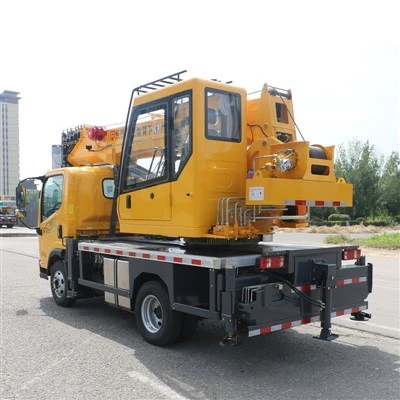
First, let’s start with the basics: what is a mobile crane operator’s training, and why isn’t just “turning the key” enough? A mobile crane isn’t a pickup truck—there’s way more going on. You’ve got hydraulic systems, load charts that you can’t just wing, wind speed sensors, outriggers that need to be set just right, and that’s before you even factor in the job site’s terrain. Most places (like here in the U.S., but really most countries) have strict rules from OSHA, the Canadian Centre for Occupational Health and Safety (CCOHS), or similar regulatory bodies. I’ve had clients ask, “Can’t my guy just do a quick online course?” Nope. There’s a reason it’s structured, hands-on, and takes time.
Let’s start with the core mandatory training modules. First up, classroom theory—but it’s not just memorizing definitions. You’ll learn about load dynamics, like how a load swings when you stop suddenly (that’s called “load sway,” and it’s a real problem), how wind affects lifting capacity (even a 10mph wind can cut your crane’s safe load by 20% if you’re lifting high), and how to read a load chart. Wait, load charts—let me tell you, those things are like the crane’s bible. They’re specific to each model, so a guy trained on a 30-ton crane can’t just hop into a 50-ton and use the same chart. You’ve got to know how to calculate the radius (distance from the crane’s center to the load), the angle of the boom, and even if the ground is level. If you set your crane on soft dirt and skip the outrigger extension, that’s a recipe for tipping over. Classroom training also covers safety protocols: pre-use inspections (yes, you have to check the crane every single morning—broken cables, leaky hydraulics, loose pins), signal person communication (you can’t yell across a busy site—you need a certified signaler, and the operator has to understand their hand signals like the back of their hand), and emergency procedures (what to do if the crane starts tipping, how to shut down properly if a cable snaps).
Next, practical hands-on training—this is where the rubber meets the road. You can’t learn to operate a crane sitting in a classroom, and you can’t learn to set outriggers on a soft spot by watching a video. Good training programs will put you in a real mobile crane (not a simulator, though sims are a decent warm-up) under the supervision of a certified instructor. You’ll practice setting up on different terrains: paved lots, gravel, soft dirt. You’ll practice lifting loads of increasing weight, learning how to make smooth, controlled moves to minimize sway. You’ll even get to deal with tricky scenarios, like a sudden gust of wind, to learn how to react without panicking. I once had a new operator show up for a demo and think he could just “drive” the crane like a truck—he kept yanking the boom too hard, making a 10-ton load swing like a pendulum. The instructor shut him down immediately; that’s the kind of mistake that could’ve killed someone. Practical training also includes learning how to do a post-use inspection, which is just as important as the pre-use one—you don’t leave a wet hydraulic line or a loose pin for the next guy.
Then there’s certification—and this isn’t just a piece of paper you print at home. In the U.S., OSHA requires that any operator working on a construction site be certified through a program that meets their standards (like the NCCCO—National Commission for the Certification of Crane Operators). That certification usually requires passing both a written exam (covering theory, load charts, safety) and a practical exam (where you have to lift a specific load, set up the crane correctly, and handle it without touching any obstacles). Some countries have their own certifying bodies, but the key here is that the certification has to be valid, up-to-date, and specific to the type of mobile crane the operator is using. If you have a rough-terrain crane (the kind with big tires for off-road sites) vs. a truck-mounted crane (the kind you drive on highways), those are different certifications—you can’t use a rough-terrain cert for a truck-mounted one, and vice versa. I’ve had clients try to cut corners by having an operator with a crane cert that only covers tower cranes work on mobile ones—total no-no. Tower cranes and mobile cranes are night and day; totally different operation, totally different risks.
Wait, what about refresher training? A lot of people think once you’re certified, you’re good forever. Nope. Rules change, crane techs get updated (like more advanced load monitoring systems), and if an operator hasn’t been on a crane in six months, they’re rusty. Good companies (and good suppliers, like us) recommend annual refresher training, or anytime an operator is moving to a new type of crane, or if there’s a safety incident on a site they worked on. I had one operator a few years back who’d been off work with an injury for a year; when he came back, he had to do a refresher course because his muscle memory for the crane controls was shot, and he didn’t know about the new wind sensor system on our 2022 model. Skipping that refresh would’ve been dangerous.
Now, let’s talk about what happens if you skip this training. I’ve seen it firsthand. A few years ago, a local contractor I supply cranes to had an operator who’d “learned on the job” from a friend, no formal training. He tried to lift a load that was just a tiny bit over the rated capacity, because he thought the load chart was “too conservative.” The crane tipped, crushed a parked pickup, and took three days to fix—cost him $50k in downtime, plus he almost got fined by OSHA. Another time, a guy who didn’t know how to communicate with his signaler kept swinging the boom into a nearby power line—thankfully no one was hurt, but the power was out for two hours for a whole block, and the contractor had to pay a big fine. Those aren’t just “oops” moments—they’re preventable, and they’re avoidable if you do the training right.
As a mobile crane supplier, this is why we don’t just sell you a crane and wave goodbye. We partner with training providers so our clients can get their operators certified quickly and affordably. We also make sure that every crane we sell comes with a full set of load charts, updated safety manuals, and we host free Q&A sessions for operators to ask about the new tech on our cranes. Last year, we had a client who was struggling to find a good training program for their new fleet of rough-terrain cranes—we connected them with a local NCCCO-approved school, and within six weeks, all their operators were certified and ready to go. That’s the kind of support we don’t just talk about; we deliver.
Wait, let’s clear up a common myth: “I can use a simulator to train instead of hands-on.” Simulators are great for learning the basics of load charts and handling simple moves, but they can’t replicate the feel of a real crane—how the cabin vibrates, how the load sways when you’re on soft dirt, how the wind actually pushes the boom. I’ve seen operators who were great on simulators freeze up when they had to set outriggers on a slope because the simulator didn’t have that level of terrain variation. Hands-on training is non-negotiable, full stop.
Another thing: job site-specific training. Even if an operator is certified, they might need a quick briefing before a tricky job—like lifting near a busy road, or in a tight space where they have to avoid trees or other equipment. That’s not a replacement for formal training, but it’s a good add-on. I always tell clients: don’t just rely on the operator’s cert—do a pre-job briefing every time, go over the site layout, the load details, and any hazards. That extra 10 minutes can save a lot of trouble.
So, to wrap this up: training for mobile crane operators isn’t a checkbox. It’s a combination of classroom theory, hands-on practical experience, valid certification, and regular refreshers. As someone who’s been in this game for years, I can’t stress enough how important it is to not cut corners here. A good operator isn’t just someone who can turn a key and move a boom—they’re someone who understands the equipment, follows the rules, and keeps their site safe.
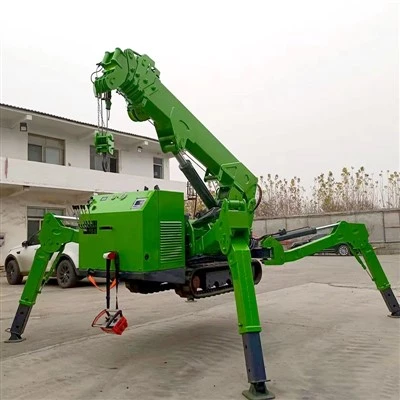
If you’re in need of a reliable mobile crane, or you have questions about operator training for your fleet, we’re here to help. We’ve got a range of mobile cranes to fit any job, and we can connect you with trusted training providers to get your team certified. Just reach out to us to learn more and start a conversation about what you need.
Boom Lift Truck References
Occupational Safety and Health Administration. (2023). Crane and Derrick Standards. U.S. Department of Labor.
National Commission for the Certification of Crane Operators. (2024). Mobile Crane Operator Certification Requirements.
Canadian Centre for Occupational Health and Safety. (2023). Mobile Crane Safety Guidelines.
Jining Baoliwei Construction Machinery Sales Co., Ltd.
Jining Baoliwei Construction Machinery Sales Co., Ltd. is one of the most reliable mobile crane manufacturers and suppliers in China, featured by quality products and good price. Please rest assured to buy durable mobile crane made in China here from our factory. Customized orders are welcome.
Address: South of Provincial Highway 338, west of Jiacheng Road, Jining Economic Development Zone, Jining City, Shandong Province, China
E-mail: 17853735607@163.com
WebSite: https://www.baoliweicrane.com/
