When I first started working as a threaded cutter supplier, I used to get so many questions from shop foremen and new machinists alike. A lot of them would walk into our workshop, point at different cutters on the shelf, and just say “need a thread cutter for my lathe” — no specifics, no idea there’s a whole bunch of thread types out there, and how picking the wrong one can ruin a part, damage a tool, or even stall a whole production line. That’s why I wanted to break down the key differences between the most common threaded cutter types, straight from someone who’s been in the thick of it for years. No fancy jargon, just real talk that’ll help you make the right call next time you’re ordering tools. Threaded Cutter
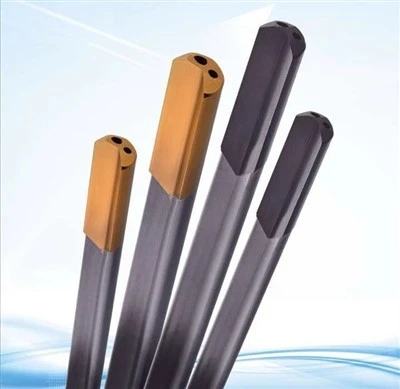
First off, let’s clear up what a threaded cutter actually does, for anyone who’s new. It’s not a thing that cuts just any thread — it’s a specialized tool made to carve helical ridges into metal (or plastic, depending on your work) to create internal or external threads. Think about the bolts that hold your car’s engine together, the nuts that go on them, even the threaded holes in your bike’s frame: all of those start with a threaded cutter doing the heavy lifting. The biggest mistake most people make is treating all thread cutters the same, but the type you pick depends on three big things: the thread profile you need, where you’re cutting (internal vs. external), and the material you’re working with.
Let’s start with the most basic split people usually miss: internal vs. external thread cutters. External ones, like die head thread cutters, are the ones you use to cut threads on the outside of a rod, bolt, or pipe. They wrap around the workpiece and cut from the outside in, right? Then there are internal thread cutters, which go into a pre-drilled hole and carve threads on the inside wall — that’s the stuff you can’t reach with a die. But even within those two groups, there’s a ton of sub-types, each with their own job.
For external threads, the super common one is a round threading insert cutter — the flat, indexed inserts you see most CNC shops using these days. Back in the day, machinists used solid carbide dies or hand threaders, but inserts are way more flexible. You can swap out an insert for a different thread profile without changing the whole tool holder, which saves a ton of time on production runs. But wait, not all round inserts are the same. Some are for general-purpose use, good for steel, aluminum, even cast iron, while others are made for specific materials — like those with high heat resistance for stainless steel, which gets gummy if you don’t use the right cutter. I see a lot of guys grab a general-purpose insert for a tough stainless job, and then wonder why their tool is wearing out in 10 parts instead of 50. That’s the kind of mistake we’re here to avoid.
Then there are die head thread cutters, which are still the go-to for high-volume external threading, especially on lathes or pipe threads. These are quick-change, so you can switch between pipe sizes or thread pitches in minutes, no need to re-calibrate the whole setup. Pipe threads, by the way, are a whole separate beast — they’re tapered, not straight, to create a tight seal for fluids, so regular external thread cutters won’t work here. You need specific tapered die heads for NPT (National Pipe Thread) or BSP (British Standard Pipe) threads, otherwise your pipe fitting will leak, and that’s a big problem for plumbing, oil and gas, even hydraulics. I once had a customer who tried using a standard external insert for a pipe thread run, and he ended up with 200 bad fittings that had to be scrapped. That’s a $2,000 mistake, all because he didn’t realize pipe threads aren’t just regular V-threads.
Now internal thread cutters — this is where a lot of new machinists get overwhelmed, because there’s so many types. Let’s start with tapers, but wait — no, taps are actually a type of threaded cutter, right? Wait, hold on, let’s get that straight: taps are for cutting internal threads, and there are hand taps, machine taps, and then thread mill taps? No, wait, thread mills are another sub-type. Wait, let’s not confuse tap and thread mill — that’s a common mix-up. A tap is a tool with flutes that cuts threads as you twist it into a pre-drilled hole, good for blind holes (holes that don’t go all the way through the workpiece) or high-volume runs. But thread mills, on the other hand, are like rotating cutters that move in a helical path to carve internal threads. They’re way more flexible for large internal threads, or for hard materials where taps break easily. If you have a hole larger than 1 inch, a tap might not be cost-effective, so a thread mill is the way to go. Also, thread mills are better for adjustable thread sizes — you can tweak the tool’s path to get the exact thread pitch you need, which is a huge plus for custom parts.
Wait, but let’s talk about tap types, because that’s a big part of internal threaded cutters. There’s plug taps, bottoming taps, taper taps. Taper taps have a long lead taper, good for starting threads in a new hole — they cut the first few threads easily. Plug taps are the middle ground, work for most through holes. Bottoming taps have a very short lead, so they cut all the way to the bottom of a blind hole. If you use a plug tap in a blind hole, you’ll end up with a flat spot at the bottom, no thread there, and that can make a part useless. I had a machinist tell me once that he messed up a custom bracket for a medical device because he used a plug tap instead of a bottoming tap — the customer rejected 50 parts, and that cost him a week of rework. That’s the kind of detail that makes or breaks a job.
Then there’s the type of thread profile, which is the shape of the thread’s ridge. The most common one is the 60-degree V-thread, used for bolts, nuts, general purpose stuff. But there’s also ACME threads, which are trapezoidal, used for heavy loads — like in machine lead screws, vice jaws, things that need to move heavy parts. ACME thread cutters are shaped differently, with a 29-degree angle, so you can’t use a regular V-thread cutter for that. And then there’s square threads, which are even for heavier loads, though less common these days, and buttress threads, which are for one-directional heavy loads, like in vices or presses. If you’re working on a part that needs to carry a lot of weight, you can’t just grab a random thread cutter — you need the one with the right profile.
Another thing people don’t talk about enough is material compatibility, which ties into the type of cutter. Threaded cutters are made from high-speed steel (HSS), solid carbide, or coated carbide, right? HSS is cheaper, good for low-volume runs, soft materials like aluminum or brass. But if you’re cutting stainless steel, titanium, or hardened steel, HSS will wear out way too fast — you need solid carbide or coated carbide. Coated carbide cutters have a thin layer of TiN (titanium nitride) or TiCN (titanium carbon nitride) that reduces friction and heat, so they last longer, cut faster, and produce better threads. I’ve seen shops try to save a few bucks by using HSS for high-volume stainless jobs, and end up replacing cutters twice as often, which actually costs more in the long run. That’s a big tip from our side: don’t just go for the cheapest cutter, match the material to the tool.
Wait, let’s also mention single-point vs. multi-point cutters. Single-point thread cutters are usually inserts you use on a CNC lathe, you set the tool to the exact profile, and it cuts one thread at a time. They’re super accurate, good for custom or precision parts, but slower for high volume. Multi-point cutters, like dies or multi-flute taps, have multiple cutting edges, so they remove material faster, perfect for high-volume jobs where speed matters. The trade-off is that multi-point cutters are less flexible — if you need a new thread pitch, you might have to change the whole cutter, whereas a single-point insert just needs a new insert. That balance between accuracy, speed, and flexibility is what makes picking the right type so tricky.
Let me give you a real example from our work, to make this concrete. Last quarter, a customer came to us needing thread cutters for two different jobs. First job: high-volume external threads on 1-inch steel bolts, 20 threads per inch. They were doing 10,000 bolts a week, so we recommended quick-change die heads — they can switch between bolt sizes fast, and the multi-flute cutting edges make short work of the steel, perfect for high volume. Second job: custom internal threads in a 2-inch aluminum block for a drone component, the threads needed to be super precise to fit a custom bolt. We went with a solid carbide thread mill, because the large internal diameter made a tap less efficient, and the flexibility of the thread mill let them tweak the path to get the exact tolerance they needed. The customer told us later that they cut their tooling time in half on both jobs, no bad parts, and that’s exactly why we’re here — matching the right cutter type to the job.
A lot of people also forget about thread pitch, which is the distance between threads, and how that ties to the cutter. Some cutters are for specific pitches, others are adjustable. For example, adjustable die heads let you adjust the diameter slightly to compensate for material expansion, which is great for pipe threads that need a tight seal. Fixed-pitch inserts are more accurate, though, so you use those when precision is non-negotiable, like in aerospace parts, where a 0.001-inch error can cause a part to fail.
Now, here’s the thing: if you’re still not sure which thread cutter type you need, don’t guess. A lot of machinists try to wing it, and that’s when mistakes happen. We’ve been supplying threaded cutters to shops of all sizes for years, so we know how to walk through your job, your material, your volume, and pick the right tool for you. Whether you’re a small shop doing custom jobs or a big production facility running 24/7, we have the experience to help you avoid those costly mistakes.

If you’re tired of replacing worn-out cutters, getting bad threads, or wasting time switching tools between jobs, reach out to us. We can walk through your exact needs, show you different cutter types, and get you set up with the right tools for your job. No pressure, no confusing sales pitches — just real advice from people who know threaded cutters inside and out. Just get in touch to start a conversation about your project, and we’ll make sure you get the right tools to get the job done right.
Special-shaped Cutting Tools References
- Machining Fundamentals. Industrial Press Inc.
- Tool and Die Making Handbook. Society of Manufacturing Engineers.
- Threading Technology for CNC Machining. Kennametal Inc.
- Pipe Threading Standards for Industrial Applications. American National Standards Institute (ANSI).
- High-Performance Cutting Tools for Metalworking. Sandvik Coromant.
Kunshan Zhiyi Dingli Cemented Carbide Tool Co., Ltd.
We are one of the most professional threaded cutter manufacturers and suppliers in China, also support customized service. We warmly welcome you to wholesale high quality threaded cutter made in China here from our factory. If you have any enquiry about cooperation, please feel free to email us.
Address: No.80 Chuangfu Road, Qiandeng Town, Mondragon Industrial Park, Kunshan City, Suzhou, Jiangsu, China.
E-mail: 2060056236@qq.com
WebSite: https://www.kszydl.net/
