If you’ve ever spent time working with RF systems, CCTV setups, test lab equipment, or even some legacy broadcast gear, chances are you’ve come across a BNC connector—small, cylindrical, and deceptively simple looking. But let’s be real, most people who reach for one barely stop to ask: what is that little barrel-shaped piece that connects two of them end-to-end? At our BNC RF connector company, we see this all the time: customers will call to order replacement BNC barrels because they lost one on a job, or ask why their old setup isn’t working after a quick connection. The BNC barrel is a tiny but critical part of the BNC ecosystem, and skipping the details on how it works, what it’s for, or how to pick the right one can lead to big headaches down the line. BNC RF Connector
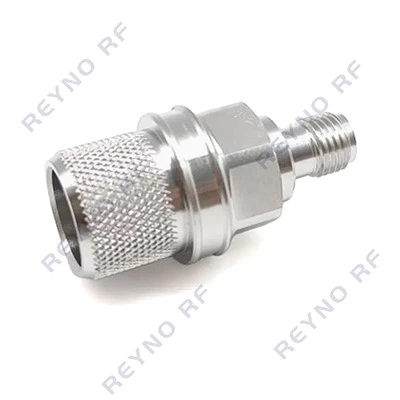
First, let’s break down exactly what a BNC barrel connector is, for anyone who’s still fuzzy. A BNC connector itself is a type of coaxial connector, designed for radio frequency (RF) applications, meaning it carries high-frequency electrical signals with minimal loss. BNC stands for Bayonet Neill–Concelman, named for the bayonet-style locking mechanism that lets you click it into place with a quarter-turn twist—way faster than the older threaded connectors for field use. Now, a BNC barrel connector is just the female-to-female (or occasionally male-to-male, though that’s far less common) adapter that links two standard BNC cables or devices together. It’s shaped like a short, hollow metal tube, with BNC female pins and sockets on each end. You plug the male end of your existing BNC cable into one side of the barrel, then plug the male end of your second cable into the other side, twist to lock, and boom—you’ve extended your signal path. Simple in form, but the engineering behind it is anything but trivial for RF use.
If you’ve ever had a bad BNC barrel, you know how annoying that can be. A loose connection means signal dropouts on a CCTV camera feed, static on a ham radio, or unreliable readings from a lab oscilloscope. The reason these adapters matter so much for RF is that coaxial cables rely on maintaining a consistent impedance (usually 50 ohms for most RF systems, or 75 ohms for video and broadcast) along their entire length. A cheap, poorly made barrel can throw that impedance off, causing signal reflection—some of your power bounces back instead of going where it’s supposed to. For low-frequency applications, that might not be noticeable, but for high-frequency RF work (like above 1 GHz, common in 5G testing, aerospace, or military communications), even a tiny impedance mismatch can kill signal quality entirely.
That’s why at our BNC RF connector manufacturing facility, we don’t cut corners on the materials or construction of our BNC barrels. Let’s pull back the curtain on what makes a quality BNC barrel vs. a disposable one. The outer shell, usually made of nickel-plated brass or stainless steel, needs to be durable enough to handle hundreds of connect/disconnect cycles—think a tech swapping out cables on a test bench every hour, not one-and-done use. The inner contact, the part that actually makes the electrical connection between the two BNC cables, is usually a silver-plated copper or beryllium copper pin. Silver is used for its high conductivity, and plating prevents corrosion, which is a big issue if barrels are used outdoors or in humid environments. The dielectric (the insulator between the inner and outer parts) is almost always PTFE (Teflon), which has a low dielectric constant that helps maintain consistent impedance even at high frequencies. Cheap barrels often use plastic or even cardboard for the dielectric, which absorbs moisture, changes shape with temperature, and ruins the signal.
Now, you might be thinking, “Why not just buy the BNC connectors and make my own extension?” Well, technically you can, but that’s a bad idea for a few reasons. First, assembling a coaxial connector requires specialized crimpers, stripping tools, and testing equipment to make sure the inner conductor is aligned perfectly, the shield is properly attached, and there are no stray wires causing short circuits. For a single barrel, that’s a lot of work when a pre-made, tested barrel is designed to do exactly that. Second, even if you assemble the connectors correctly, a homemade adapter might not have the same impedance matching, leading to the same signal issues we talked about earlier. For professional applications like medical imaging equipment or military test gear, that level of inconsistency isn’t acceptable—you need a connector that’s been engineered and tested specifically for that use case.
Let’s talk about the different types of BNC barrels, because not all of them are the same. The most common is the straight female-to-female barrel, which is exactly what you’d use to extend two straight BNC cables in a CCTV system. But there are other specialized ones for specific jobs. For example, there’s the 90-degree angle barrel, which lets you connect two BNC cables that are at a right angle to each other—perfect for tight spaces where a straight barrel wouldn’t fit, like inside a server rack. We also make BNC barrels with integrated terminators, which are used to end a signal path to prevent reflections at the end of a cable run. A terminator barrel has a built-in resistor matched to your system’s impedance (usually 50 or 75 ohms) instead of a female socket on one end, so you plug your last cable into it to absorb any remaining signal. For test applications, we offer precision BNC barrels that are tested to work up to 18 GHz, ideal for high-frequency lab work.
A common question we get from customers is: “Can I use a BNC barrel from a cheap electronics store for my professional setup?” Our answer is almost always no, and here’s why. Most off-the-shelf BNC barrels are mass-produced in low-cost facilities, with subpar materials and minimal testing. They might work for a temporary setup, like hooking up a home TV antenna, but for anything that requires consistent signal quality—like a security system for a retail store, a wireless base station, or a university research lab—those cheap barrels will start failing quickly. The inner contact might not make full connection every time, leading to intermittent dropouts, or the impedance might be off by several ohms, causing signal loss at even moderate frequencies. For a business that relies on 24/7 CCTV monitoring, a failed connection caused by a bad barrel can be a major security risk, and the cost of downtime is way higher than the cost of a quality BNC barrel from a reputable supplier.
Another thing to consider is environmental factors, which a lot of people overlook. If you’re working outdoors, in extreme temperatures, or in dusty, high-humidity areas, you need a BNC barrel that’s rated for harsh conditions. We make weather-sealed BNC barrels with rubber gaskets that protect the inner connections from water and dust, so they can be used in outdoor CCTV installs, construction site test equipment, or marine electronics. Non-sealed barrels will corrode in just a few months of outdoor use, leading to signal degradation and needing frequent replacements. For high-vibration environments, like aircraft or heavy machinery, we offer ruggedized BNC barrels with locking mechanisms that prevent the barrel from coming loose accidentally.
Now, let’s address a common misconception: BNC barrels are only for video. While they’re ubiquitous in CCTV and broadcast TV (which mostly use 75 ohm BNC systems), they’re used in a huge range of RF applications. Radio amateurs use them to connect antennas to transceivers, test engineers use them to route signals through test benches, aerospace companies use them in avionics systems, and even medical devices like MRI machines use BNC barrels to connect sensors. Any time you have a coaxial RF signal that needs to be extended or rerouted, there’s a good chance a BNC barrel is the right part for the job.
At our BNC RF connector company, we’ve been supplying quality RF components to industries around the world for years, and we’ve seen firsthand how even a small part like a BNC barrel can make or break a project. We’ve had a customer come to us after a job where they used cheap barrels for a high-end security system, only to have 20% of their cameras go offline at random. After switching to our precision BNC barrels, the dropouts stopped entirely, and the system has been running reliably for over three years now. That’s the kind of impact a well-made component can have, and it’s why we take pride in every barrel we manufacture.
If you’re working on a project and you’re not sure what kind of BNC barrel you need, or if you’ve had issues with signal quality from your current connections, we’re here to help. We offer a wide range of BNC barrels, from standard female-to-female for everyday use to specialized high-frequency and ruggedized options for harsh environments. Our team has years of experience in the RF industry, and we can help you pick the right component for your specific application, whether it’s a home setup, a commercial security system, or a high-stakes lab test.
Don’t let a bad BNC barrel ruin your signal or delay your project. Whether you need a single replacement part for a quick repair or a bulk order for a large-scale installation, we can provide the quality, reliability, and support you need. Reach out to our team to discuss your BNC RF connector requirements, and we’ll help you find the perfect solution for your needs.
N RF Connector References:
- Poschel, T. (2018). Coaxial Connectors: Theory and Practice. RF Design Magazine.
- Microwave Journal. (2020). Impedance Matching in RF Connectivity.
- Telcordia Technologies. (2019). Generic Requirements for Coaxial Connectors Used in Telecommunications.
- Johnson, H., & Graham, M. (2003). High-Speed Signal Integrity: Advanced Concepts. Prentice Hall.
Zhenjiang Leiluo Electronic Co., Ltd.
Zhenjiang Leiluo Electronic Co., Ltd. is one of the most professional bnc rf connector manufacturers and suppliers in China. We have world-leading production equipment and strong manufacturing capabilities. Please feel free to buy advanced bnc rf connector for sale here and get quotation from our factory. Customized orders are welcome.
Address: No.21 Houxiang Industrial Road, Danbei Town, Danyang City, Jiangsu Province
E-mail: wenvy@rfleiluo.com
WebSite: https://www.rfreyno.com/
