Hey there, Laser Power Supply

If you’ve ever hung out in a lab that does high-precision cutting, medical device manufacturing, or even the crazy-accurate micro-chipping work that powers our phones, you’ve probably heard the term “UV laser power supply” tossed around. Maybe you’ve even seen one tucked next to a big UV laser emitter, looking like a generic metal box at first glance, but trust me—this little workhorse is the unsung hero that makes the whole thing actually work. As someone who’s been in the laser power supply game for over a decade now, I get that a lot of folks outside our niche don’t know the first thing about what these things do, let alone why they matter. So let’s break it down, no stuffy jargon, no corporate fluff—just real talk about what a UV laser power supply is, how it’s different from the power supply in your laptop, and why if you’re working with UV lasers, you don’t wanna cut corners here.
First off, let’s start with the basics: a power supply, in general, is just any device that takes the electricity coming out of your wall (that’s alternating current, or AC, for the nerds) and converts it into the specific type of power whatever you’re plugging in needs to run. Your laptop’s power supply does that, your fridge’s does that—total basic tech, right? But a UV laser is not your average household appliance. It runs on ultraviolet light, which is way higher in energy than the visible light you see every day. That means it needs power that’s way more precise, way more stable, and way harder to deliver than what a regular power supply can give you. A UV laser power supply isn’t just a power adapter—it’s the brain and the backbone that keeps that UV laser firing exactly how it’s supposed to, every single time.
Wait, let’s get specific about UV lasers first, because that context matters. Most lasers we know (like the ones at rock shows or in laser pointers) are visible light, right? Red, green, that stuff. UV lasers are way different—they operate at wavelengths under 400 nanometers, way beyond what our eyes can see. The energy in that light is intense enough to do some wild, precise stuff: cut tiny holes in a contact lens, engrave a serial number on a silicon microchip that’s smaller than a grain of sand, even remove damaged tissue during eye surgery without hurting the surrounding areas. But here’s the catch: UV lasers are super finicky. Their output depends entirely on the power they get. If the power even wiggles by a tiny fraction—like, a 0.1% fluctuation—you get uneven cuts, blurry engravings, or even a laser that just stops working halfway through a job. That’s not an “oops I spilled coffee on my laptop” problem; that’s thousands of dollars in wasted materials, missed deadlines, and maybe even a ruined part that took weeks to prototype.
So what does a UV laser power supply actually do, step by step? Let’s walk through the process like we’re opening up one of our units to take a look (I promise I won’t bore you with schematics, just the real stuff). First, it takes that 120V or 240V AC coming from your wall, runs it through a heavy-duty filter to get rid of any random voltage spikes or noise—think of this like a soundproofing panel for electricity, so no weird blips mess with the laser. Next, it converts that AC to direct current (DC), which is what all electronics use, but not just any DC. For UV lasers, we need DC that’s regulated to within tenths of a percent, no more. Then, it boosts that DC to the exact voltage the laser tube or diode needs—UV diodes often run at 10-20V, but the drivers inside need much higher currents, right? Wait, also, different UV lasers use different technologies: some are excimer lasers, others are solid-state (like Nd:YAG frequency-doubled to UV), and some are diode lasers. That means the power supply’s gotta be tailored. A power supply for an excimer laser is way different from one for a UV diode array, because their needs are totally different. Our team spends a ton of time matching the power supply to the laser, not just the other way around—we learned early on that a one-size-fits-all unit might work for a week, then die, or start producing wonky UV light.
Here’s the part that makes UV laser power supplies different from any other power supply you’ve used: they’re not just delivering power—they’re controlling it. Most units have built-in feedback loops that monitor the laser’s output in real-time, hundreds of times a second. If the laser starts firing a little less power, the power supply cranks up the current just enough to fix it. If it’s firing too much, it pulls it back. That’s non-negotiable for UV work, because even the smallest variation in power changes the wavelength, the beam quality, and the accuracy of the laser’s work. I once had a customer come to us after a bad experience with a cheap power supply he bought online—he was engraving tiny barcodes on medical implants, and 1 in 20 parts were rejected because the lines were too thin. Turns out the cheap power supply had a 2% fluctuation in current, which was enough to mess with the UV laser’s spot size. We swapped it for our custom unit, and his reject rate dropped to almost zero. That’s the difference between a generic power supply and one built for UV lasers.
Another thing most people don’t realize: UV lasers run hot. Like, really hot. The power supply has to handle that heat too, because if it overheats, it’ll shut down mid-job, or send bad power. All our units have built-in thermal management—heavy-duty fans, heat sinks designed specifically for our components, even temperature sensors that cut power gradually if it gets too hot, instead of just dying suddenly. We also test every single unit we build for 72 hours straight, under full load, before it leaves our shop. No rushing orders, no skipping testing—we learned the hard way that a unit that works in the shop but dies at a customer’s facility is a bad look, and worse, it costs them money.
Wait, let’s talk about common misconceptions, because I hear these all the time. First: “Can’t I just use a regular power supply for my UV laser?” Let’s be real—you can, but why would you? Regular power supplies don’t have the precision, the feedback loops, or the thermal management. Sure, a cheap unit might get the laser to turn on, but it’ll never run reliably, especially for high-volume jobs. Second: “All UV laser power supplies are the same.” Nope. If you’re running an excimer laser for semiconductor manufacturing, you need a power supply that can handle high voltage and fast discharge rates, because excimer lasers fire in nanosecond pulses. If you’re using a UV diode for small-batch engraving, you need something smaller, cooler, with lower noise. Our team builds custom and semi-custom units for every type of UV laser—no matter if you’re a startup making custom 3D-printed parts or a big aerospace company doing micro-machining for aircraft components.
Now, let’s get into why this matters for your operation. I’ve been in this space long enough to know that no matter what industry you’re in, downtime is expensive. If your laser is down for an hour, that’s an hour you’re not producing parts, an hour you might miss a deadline, an hour you’re paying your team to stand around. A good UV laser power supply doesn’t just keep your laser running—it keeps your whole operation running. We’ve had customers tell us that swapping to our power supplies cut their unplanned downtime by 70% within the first month. That’s not a sales line—that’s real numbers from real work.
Also, let’s touch on something that’s big lately: efficiency. Power costs are only going up, right? A lot of older UV laser power supplies are super inefficient, wasting a ton of energy as heat. Our units are designed to be 92%+ efficient, which means you’re not throwing money out the window as extra heat. That adds up—for a customer running their laser 24/7, that can save them thousands of dollars a year on electricity. It’s not just about performance; it’s about your bottom line too.
Wait, let’s clear up another point: UV laser power supplies vs. other types of laser power supplies. CO2 lasers, which are common for cutting wood and acrylic, run on infrared light. Their power supplies are totally different—they work with lower voltages, different gas mixtures, no need for the tight wavelength and power stability that UV requires. Fiber lasers, which are used for metal cutting, also have different needs. UV is in a league of its own, because the photons are so high energy that even tiny power fluctuations cause massive changes in output. That’s why a generic power supply for fiber lasers won’t work for UV—they’re built for different jobs.
Let me tell you a quick story that drives this home. A few years back, we got a call from a medical device company that was making stents—tiny, mesh tubes used to clear blocked arteries. They were using a UV laser to cut the stent struts, which had to be exactly 0.1mm thick, with zero burrs. Their old power supply (which they’d bought from a big box laser supply place) was causing the struts to vary in thickness by up to 0.02mm. That might sound tiny, but for a stent, that meant it wouldn’t expand properly inside a blood vessel, which is a huge safety issue. They were failing inspections, and risking a shutdown if they didn’t fix it fast. We brought in a prototype of our power supply, installed it overnight, and the next day their strut thickness variation was down to 0.002mm. They told us that not only did they fix their inspection issue, but they also increased their production rate by 15% because the laser was running more consistently, no pausing to adjust. That’s the kind of impact a good UV laser power supply has—beyond just keeping the lights on, it’s making your product better, faster, and safer.
Now, I know what you’re thinking: “Okay, this all sounds good, but how do I know if I need a new power supply, or if our current one is underperforming?” Let’s list a few red flags. If you’re seeing inconsistent results in your laser cuts or engravings—like some parts being perfect, others having blurry edges or uneven lines—your power supply is probably causing that. If your laser is shutting down unexpectedly, or making weird noises (not the normal laser hum), that’s another sign. If your electricity bills are way higher than they should be for the hours your laser runs, that could be an inefficient power supply wasting energy. And if you’ve had to replace your power supply more than once in the last two years, that’s a sign you’re using the wrong unit for your needs.
Here’s the thing: at the end of the day, a UV laser power supply isn’t a commodity part. It’s a critical component that makes your entire laser system work. You wouldn’t buy a top-of-the-line sports car and put cheap tires on it, right? Same logic here. Your UV laser is an investment—you spent tens of thousands, maybe hundreds of thousands, on that machine. Putting a flimsy, generic power supply on it is like pouring money down the drain. It limits the laser’s performance, shortens its lifespan, and costs you more in downtime and wasted materials.
Our team has been building UV laser power supplies for every industry you can think of—medical devices, aerospace, semiconductor, consumer electronics, even research labs at universities. We don’t do one-size-fits-all, because we know every customer’s needs are different. Do you need a compact unit for a benchtop laser in a small lab? We’ve got that. Do you need a high-power unit for a 24/7 production line? We build those too. We work with you to figure out exactly what your laser needs, build a unit that matches, test it thoroughly before it ships, and provide support long after you plug it in.
If you’re reading this and nodding along because you’re dealing with inconsistent laser results, unplanned downtime, or just want to make sure your operation is running as smoothly as possible, reach out to us. We don’t push products that don’t fit your needs—we’ll ask you about your laser type, your production volume, your goals, and give you honest advice on whether a new power supply is the right move, or if there’s a tweak we can make to your existing setup. No sales pressure, no fine print, just real solutions for real problems.
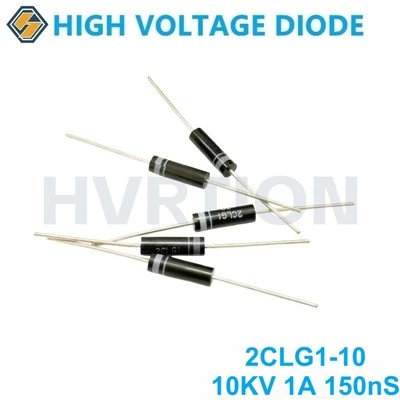
At the end of the day, the best laser system in the world is only as good as the parts that power it. A UV laser’s power supply isn’t just a box of wires and circuits—it’s the thing that turns raw electricity into the precise, consistent UV light that makes your product possible. If you’re tired of settling for mediocre results, it’s time to treat that power supply like the critical part it is.
Bell-type High Voltage Diode References
- IEEE Journal of Quantum Electronics, "Power Supply Requirements for Ultraviolet Laser Systems", 2019
- Laser Focus World, "The Hidden Role of Power Supplies in UV Laser Precision", 2021
- International Society for Optics and Photonics (SPIE), "High-Efficiency Power Supplies for Ultraviolet Laser Applications", 2020
- Medical Device & Diagnostic Industry, "Precision UV Laser Power for Stent Manufacturing", 2018
Anshan HVRTION Electronic Technology Co., Ltd.
As one of the most professional laser power supply manufacturers and suppliers in China, we’re featured by quality products and good price. Please rest assured to buy discount laser power supply for sale here and get quotation from our factory. We also accept customized orders.
Address: 17 East Jiefang RD., Tiedong District, Anshan, Liaoning, China.
E-mail: hvrtion@hotmail.com
WebSite: https://www.hvrtion.com/
