If you’ve ever worked in machinery, automotive, or industrial equipment, you know insert bearings are the unsung heroes—they smooth out rotation where it matters most. But here’s the thing: skimp on torque specs during installation, and you’re looking at premature wear, noise, or even a total breakdown. As an insert bearing supplier that’s been around long enough to see what happens when teams ignore this step, I can tell you this isn’t just a “minor detail” — it’s the difference between a bearing that runs for years and one that dies in months. Insert Bearings

First, let’s break down what insert bearing torque is, exactly. Insert bearings have two main parts: the inner ring you mount to a shaft, and the outer ring that sits in a housing. Torque here refers to the amount of force you apply to tighten the set screws (the little screws that clamp the bearing to the shaft) or the eccentric locking collar (a common alternative that’s great for quick, repeat installations). Too loose, and the bearing can slide on the shaft, leading to misalignment and heat buildup. Too tight, and you’ll stretch the set screw, crack the inner ring, or even damage the shaft itself — that’s a costly mistake no one wants to deal with.
I get it, though. When you’re cramming 100 installations into a shift, it’s easy to grab a wrench and guess. But guessing leads to callbacks, and callbacks kill productivity and budgets. That’s why I’ve put together a straightforward, no-fluff guide to insert bearing torque specs that’s actually useful for your shop floor, not just a textbook.
First, let’s talk set screw torque specs — super common in smaller insert bearings, like the ones used in conveyor rollers, food processing equipment, or small gearboxes. The spec here isn’t one-size-fits-all. It depends on two things: the size of the set screw and the type of insert bearing you’re using (we make both setscrew-locking and Eccentric Locking Collar (ELC) bearings, so I know the difference firsthand).
For setscrew-locking insert bearings, here’s the general range we recommend (and what we print on our packaging, too):
- M5 set screw (for 20mm bore bearings): 8–10 N·m (70–90 in-lbs). Too much here, and you’ll mushroom the set screw head — ask me how I know.
- M6 set screw (for 25mm bore): 12–15 N·m (105–130 in-lbs).
- M8 set screw (for 30–40mm bore): 20–25 N·m (175–220 in-lbs).
- M10 set screw (for 45–50mm bore): 35–40 N·m (310–350 in-lbs).
Wait, a quick pro tip here: if you’re using a flat point setscrew (the most common for insert bearings), you should always align the screw with a flat spot on the shaft. If there’s no flat, the screw will dig into the round shaft, which feels tight, but it’s a weak connection — it’ll slip under load fast. And don’t use a bolt longer than the thickness of the inner ring; sticking the screw out the other side won’t help, and it’ll hit whatever’s behind the bearing.
Now, Eccentric Locking Collars — those are the ones with the little offset collar that wraps around the shaft, perfect for larger bearings or where you need to remove and reinstall often. Torque here is a little different, because it’s not just tightening a screw — it’s seating the collar properly. For ELC-style insert bearings:
- 25mm bore bearing, 12mm collar set screw: 4–6 N·m (35–55 in-lbs).
- 30–40mm bore, 14mm collar set screw: 8–10 N·m (70–90 in-lbs).
- 45–50mm bore, 16mm collar set screw: 15–18 N·m (130–160 in-lbs).
- 55–65mm bore, 18mm collar set screw: 25–30 N·m (220–265 in-lbs).
The big mistake people make with ELCs is over-tightening that collar set screw. The collar’s job is to deform slightly to grip the shaft — if you crank the set screw too hard, you’ll break the collar’s set screw or crack the bearing’s inner ring. We see this all the time when we replace bearings that were installed wrong. If you install an ELC correctly, you’ll feel a slight “give” when you tighten the set screw, and the collar won’t rotate by hand once it’s seated. If you can spin the collar after tightening, you didn’t do it right — start over.
Wait, but what about other locking methods? Some insert bearings use adhesive or snap rings, right? Adhesive-locking bearings are common in food-grade equipment, where no tools are allowed for removal. For those, torque isn’t about set screw tightness — it’s about letting the adhesive cure properly. We usually tell customers to hold the bearing in place with hand pressure for 2–3 minutes, then let it sit for 24 hours before running the equipment. Snap ring locking, used in some light-duty applications, requires the snap ring to sit fully in the shaft’s groove — don’t force it with pliers, that’ll bend the ring and cause slip.
Now, why does this even matter? Let’s use a real example from last year. A customer of ours had a line of conveyor belts at a local warehouse — they were using setscrew-locking insert bearings. Their mechanic was tightening set screws with a 1/2” impact wrench, and cranking them way beyond spec. After 6 weeks, half the bearings had cracked inner rings, and the shafts showed scoring from the set screws digging too deep. They replaced all the bearings with ones we supplied, and followed our torque specs — no breakdowns for 10 months straight, and maintenance time went down 20% because they didn’t have to fix those broken bearings. That’s the kind of win we’re here for.
Another thing to consider: load and application. If your bearing is in a high-vibration environment (like agricultural equipment, or a mining conveyor), you’ll want to bump torque up by 10–15% to prevent loosening. If it’s in a precision application, like a CNC machine’s feed screw, you want to stick to the lower end of the spec — over-tightening here can throw the shaft alignment off, ruining parts. Temperature also plays a role: if you’re installing bearings in a hot environment (like a kiln or outdoor summer equipment), metal expands, so you should torque the screws to the higher end of the spec when they’re cold — once they run, the expansion will take up the extra.
Wait, I get that not everyone has a torque wrench lying around. We’ve all been there — grabbing a ratchet and guessing. If you don’t have a torque wrench, here’s a quick rough guide for setscrews: for M5, tighten until the screw head is flush with the inner ring (don’t go beyond). For M6, you can feel when it’s “snug” and add a quarter turn more. For M8, add a half turn. For M10, three-quarters of a turn. But this is a backup — if you can get a torque wrench, use it. It’s a $20 tool that saves you thousands in replacements.
Now, a common myth I want to bust: insert bearings are just “off-the-shelf” parts, so any torque works. Nope. We test every one of our bearings in our lab to get the optimal torque spec — it’s not a guess. We’ve tested under-torqued set screws slipping at 500 RPM, and over-torqued ones cracking at 300 RPM. That’s why our specs are based on real data, not just industry standards.
So, when you’re ordering insert bearings, make sure your supplier provides torque specs that are specific to their bearings, not generic ones from a hardware store. A lot of generic bearings will have vague torque ranges, but our specs are tailored to the material we use (high-grade steel for inner and outer rings, so they can handle the right amount of force without breaking) and our locking hardware.
If you’re still not sure what torque spec is right for your application, don’t guess. We offer free technical support for all our customers — just send over your bearing size, application, and environment, and we’ll give you the exact spec you need. No sales pitch, just honest advice.
At the end of the day, insert bearing installation is only as good as the torque you use. Too little or too much, and you’re setting yourself up for trouble. We make insert bearings that hold up, but even the best bearing won’t perform if it’s installed wrong. That’s why we prioritize clear, accurate torque specs and support for every customer.
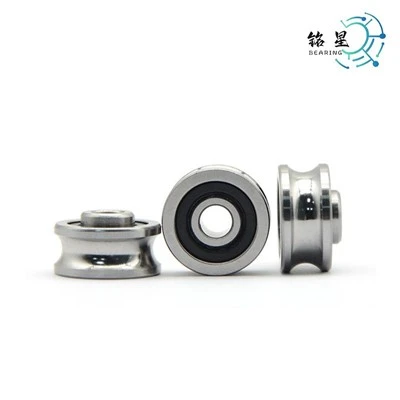
If you’re in the market for reliable insert bearings that come with clear, tested torque specs, or you just need help troubleshooting a bad installation, reach out. We’re here to make your job easier, not add headaches. We don’t cut corners on quality, and we don’t play games with specs — what you see is what you get.
Stainless Steel Bearings References
- SKF. (2022). Insert Bearing Installation and Maintenance Guide.
- Timken. (2021). Torque Specifications for Mounted Bearings.
- American Bearing Manufacturers Association (ABMA). (2020). Standard for Mounted Ball Bearings.
Taizhou Mingxing Bearing Co., Ltd.
As one of the most experienced insert bearings manufacturers and suppliers in China, we warmly welcome you to wholesale durable insert bearings in stock here from our factory. All customized bearings are with high quality and competitive price. For quotation, contact us now.
Address: No.168 Tonghe East Road, Luotuo Subdistrict, Zhenhai District, Ningbo City, Zhejiang Province
E-mail: qpj16888@outlook.com
WebSite: https://www.mingxingbearing.com/
