Hey there! I’m a supplier of industrial cooling units, and I often get asked about the cooling capacity of these bad boys. So, I thought I’d take a few minutes to break it down for you. Industrial Cooling Unit
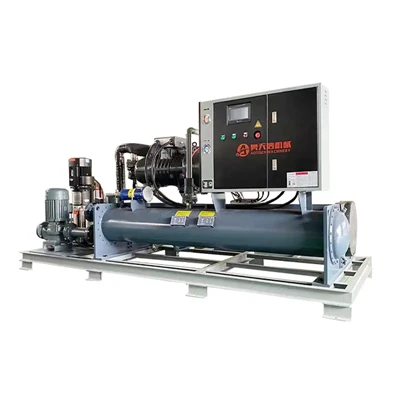
What Exactly is Cooling Capacity?
Let’s start with the basics. Cooling capacity is all about how much heat an industrial cooling unit can remove from a space or a process in a given amount of time. It’s like how much water a pump can move in an hour. In the world of cooling units, we usually measure it in British Thermal Units per hour (BTU/hr) or in kilowatts (kW).
BTU is a bit old – school, but it’s still widely used, especially in the US. One BTU is the amount of heat needed to raise the temperature of one pound of water by one degree Fahrenheit. On the other hand, kilowatts are part of the metric system and are more commonly used in many other parts of the world. To convert between them, 1 kW is approximately 3412 BTU/hr.
Why Does Cooling Capacity Matter?
You might be thinking, "Why should I care about all these numbers?" Well, getting the right cooling capacity is crucial. If you choose a cooling unit with too little capacity, it won’t be able to keep the temperature down. Your equipment might overheat, and the products you’re manufacturing or storing could get damaged.
For example, in a food processing plant, if the cooling unit can’t handle the heat load, the food might spoil. In a data center, an undersized cooling unit can lead to server failures, which can be a real headache and cost a fortune in repairs and lost business.
On the flip side, if you go for a unit with way too much capacity, you’re wasting money. You’ll pay more upfront to buy the unit, and it’ll use more energy to run, even though it doesn’t need to work that hard. It’s like using a sledgehammer to crack a nut.
Factors Affecting Cooling Capacity
So, what determines the cooling capacity an industrial space or process needs? There are a bunch of factors, and I’ll run you through some of the major ones.
Heat Load from Equipment
First off, think about all the equipment in the area. In a factory, machines generate a ton of heat. The more powerful the machinery, the more heat it gives off. For instance, a big industrial furnace can produce an insane amount of heat. You need to calculate the total heat output of all the equipment running in the space to get an idea of how much cooling you’ll need.
Ambient Temperature
The temperature outside also plays a big role. If you’re in a hot climate, like in the desert regions, the cooling unit has to work harder. The bigger the difference between the outside temperature and the desired inside temperature, the more cooling capacity you’ll require.
Humidity
Humidity is another factor. High humidity means there’s more moisture in the air. When the cooling unit cools the air, it also has to remove this moisture. This extra dehumidifying process adds to the workload of the unit, so you might need a higher – capacity unit in a humid environment.
Size of the Space
The size of the area you’re trying to cool is pretty obvious. A large warehouse will need a much bigger cooling unit than a small workshop. It’s simple math; more space means more air to cool and more heat to remove.
Calculating Cooling Capacity
Now, you might be wondering how to figure out the right cooling capacity for your specific situation. There are a few ways to do it, but it can get a bit technical.
One common method is to start by calculating the heat load. You add up the heat generated by all the equipment, the heat transfer through the building envelope (walls, roof, etc.), and the heat from people and lighting. There are lots of formulas and online calculators available to help with this.
For example, if you know the power rating of a machine in kilowatts, you can convert that to BTU/hr to get an idea of its heat output. Then you add up all these values for every heat – generating source in the space.
Once you have the total heat load in BTU/hr or kW, you can choose a cooling unit with a capacity that matches or slightly exceeds that number. It’s always a good idea to have a little extra capacity to handle any unexpected increases in heat load.
Types of Industrial Cooling Units and Their Cooling Capacities
There are different types of industrial cooling units, and each has its own range of cooling capacities.
Air – Cooled Chillers
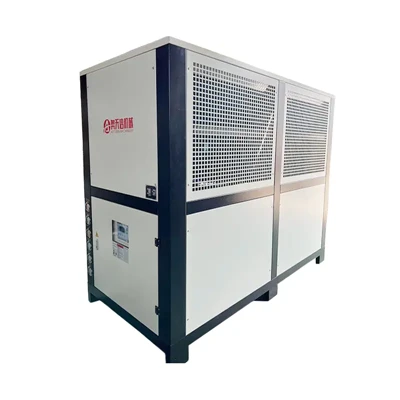
Air – cooled chillers are pretty common. They’re relatively easy to install and maintain. These units can have cooling capacities ranging from a few thousand BTU/hr for small – scale applications to hundreds of thousands of BTU/hr for large industrial plants. They work by using air to cool the refrigerant in the condenser.
Water – Cooled Chillers
Water – cooled chillers are often used in larger industrial settings where the heat load is high. They can have even higher cooling capacities than air – cooled chillers. These units use water to cool the refrigerant in the condenser, which can be more efficient in some cases. However, they require a water source and a more complex installation.
Evaporative Coolers
Evaporative coolers are a more energy – efficient option for some applications. They work by evaporating water to cool the air. Their cooling capacities are generally lower compared to chillers, but they can be a great choice for areas with low humidity. They’re often used in places like warehouses and workshops.
Our Industrial Cooling Units
As a supplier, we offer a wide range of industrial cooling units with different cooling capacities to meet your specific needs. Whether you’re running a small manufacturing shop or a large – scale industrial facility, we’ve got you covered.
Our team of experts can help you figure out the right cooling capacity for your situation. We’ll take into account all the factors I’ve mentioned – heat load from equipment, ambient temperature, humidity, and the size of the space. We’ll also consider your budget and any energy – efficiency requirements you might have.
We understand that every business is unique, and that’s why we don’t just sell you a one – size – fits – all solution. We work with you to find the best cooling unit that will keep your operations running smoothly and efficiently.
Contact Us for a Cooling Solution
If you’re in the market for an industrial cooling unit, don’t hesitate to reach out. We’re here to answer all your questions and help you make the right choice. Whether you need a quick estimate of cooling capacity or a full – blown consultation, we’re just a message away.
Screw Chillers Let’s work together to find the perfect industrial cooling unit for your business. Don’t let heat issues slow you down or cost you money. Get in touch, and we’ll start the conversation about getting you the cooling solution you need.
References
- ASHRAE Handbook – Fundamentals. This handbook provides comprehensive information on HVAC systems, including calculations for heat load and cooling capacity.
- Cooling Towers Institute publications. These resources offer insights into different types of cooling systems and their performance characteristics.
- Manufacturer’s specifications for industrial cooling units. These documents detail the cooling capacities and other features of specific products.
Kunshan Aotianxin Machinery Co., Ltd.
We’re well-known as one of the most reliable industrial cooling unit manufacturers in China. With abundant experience, our factory offer high quality industrial cooling unit made in China with low price. If you have any enquiry about quotation and free sample, please feel free to email us.
Address: 550 Shengguang Road, Bacheng Town, Kunshan City, Jiangsu Province
E-mail: 1516722561@qq.com
WebSite: https://www.atxks.com/
