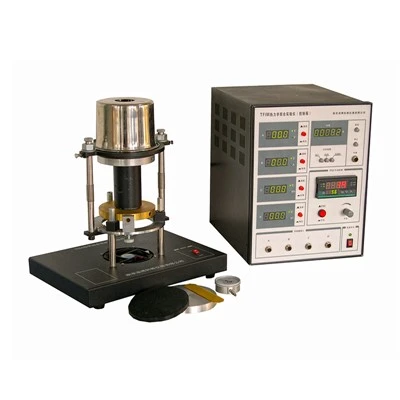
As a provider of electromagnetic instruments, I often find myself engaged in discussions about the technical nuances that make these devices indispensable in a multitude of industries. One such critical concept is the phase shift of electromagnetic instruments. In this blog post, I’ll delve into what phase shift is, why it matters, and how it impacts the performance of our electromagnetic instruments. Electromagnetic instruments
Understanding Phase Shift
To grasp the concept of phase shift, we first need to understand the basic nature of electromagnetic waves. Electromagnetic waves are a fundamental part of the physical world, encompassing everything from radio waves to visible light and X – rays. They are characterized by several parameters, including amplitude, frequency, and phase.
Phase is an angle that describes the position of a point in the cycle of a wave. It is typically measured in degrees or radians. For a sinusoidal wave, a full cycle is equivalent to 360 degrees or 2π radians. A phase shift occurs when there is a change in the relative position of two waves of the same frequency.
Mathematically, if we have two sinusoidal waves (y_1 = A_1\sin(\omega t)) and (y_2=A_2\sin(\omega t + \phi)), where (\omega) is the angular frequency, (t) is time, (A_1) and (A_2) are the amplitudes, and (\phi) is the phase shift. The phase shift (\phi) represents the time delay or advance between the two waves. A positive phase shift means that (y_2) leads (y_1), while a negative phase shift means that (y_2) lags (y_1).
Causes of Phase Shift in Electromagnetic Instruments
There are several factors that can cause phase shift in electromagnetic instruments. One of the primary causes is the presence of reactive components such as inductors and capacitors in the instrument’s circuitry.
Inductive Reactance
An inductor is a passive electrical component that stores energy in a magnetic field when an electric current flows through it. When an alternating current (AC) passes through an inductor, the magnetic field around it changes continuously. This changing magnetic field induces an electromotive force (EMF) that opposes the change in current. As a result, the current in an inductor lags behind the voltage by 90 degrees.
The inductive reactance (X_L) is given by the formula (X_L=\omega L), where (\omega = 2\pi f) ((f) is the frequency of the AC signal) and (L) is the inductance of the inductor. The higher the inductance or the frequency, the greater the inductive reactance and the more significant the phase shift.
Capacitive Reactance
A capacitor, on the other hand, stores energy in an electric field between two conductive plates separated by an insulating material. When an AC voltage is applied across a capacitor, it charges and discharges continuously. The current in a capacitor leads the voltage by 90 degrees.
The capacitive reactance (X_C) is given by the formula (X_C=\frac{1}{\omega C}), where (C) is the capacitance of the capacitor. The higher the capacitance or the lower the frequency, the lower the capacitive reactance and the more significant the phase shift.
Material Properties
The properties of the materials used in the construction of electromagnetic instruments can also cause phase shift. For example, magnetic materials with high magnetic losses can introduce phase shifts in magnetic field measurements. Dielectric materials in capacitors can also affect the phase relationship between voltage and current due to their dielectric losses.
Importance of Phase Shift in Electromagnetic Instruments
Phase shift plays a crucial role in the performance and functionality of electromagnetic instruments. Here are some key areas where it has a significant impact:
Measurement Accuracy
In many measurement applications, such as power measurement, impedance measurement, and phase – sensitive detection, accurate knowledge of the phase shift is essential. For example, in power measurement, the power factor is defined as the cosine of the phase angle between the voltage and current. A phase shift in the measurement can lead to inaccurate power calculations, which can have serious implications in industrial and electrical systems.
Signal Processing
In signal – processing applications, phase shift is used for various purposes, such as filtering, modulation, and demodulation. For example, in a phase – locked loop (PLL), the phase shift between the input signal and the output signal is continuously monitored and adjusted to ensure that the output signal is synchronized with the input signal.
Communication Systems
In communication systems, phase shift is used to encode information. For example, in phase – shift keying (PSK), the phase of the carrier wave is changed to represent different binary symbols. The accurate detection and decoding of these phase – shifted signals are critical for reliable communication.
Managing and Compensating for Phase Shift
As a provider of electromagnetic instruments, we understand the importance of managing and compensating for phase shift to ensure the accuracy and reliability of our products. Here are some of the techniques we use:
Calibration
Calibration is a fundamental process in which the instrument is compared against a known standard to determine its phase – shift characteristics. During calibration, the phase shift is measured at different frequencies and amplitudes, and correction factors are calculated. These correction factors are then used to adjust the instrument’s output to compensate for the phase shift.
Circuit Design
In the design of our electromagnetic instruments, we carefully select and arrange the components to minimize phase shift. For example, we use low – loss materials and optimize the layout of the circuit to reduce the effects of inductive and capacitive coupling. We also use phase – compensation circuits, such as phase – shifter networks, to adjust the phase relationship between different signals.
Digital Signal Processing
With the advent of digital signal – processing (DSP) techniques, we can now implement advanced algorithms to compensate for phase shift. These algorithms can analyze the input signals in real – time and apply appropriate phase – correction filters to remove the phase shift.
Impact of Phase Shift on Different Types of Electromagnetic Instruments
Oscilloscopes
Oscilloscopes are widely used to visualize and analyze electrical waveforms. Phase shift can affect the accuracy of the time – domain measurements made by an oscilloscope. If the oscilloscope channels have different phase responses, it can lead to errors in the measurement of the time difference between two signals.
Spectrum Analyzers
Spectrum analyzers are used to analyze the frequency content of electrical signals. Phase shift can cause inaccuracies in the measurement of the phase spectrum. In some applications, such as phase – sensitive demodulation, accurate phase – spectrum measurements are essential.
Power Analyzers
Power analyzers are used to measure electrical power, energy, and other related parameters. As mentioned earlier, phase shift between the voltage and current can lead to inaccurate power – factor measurements. A high – quality power analyzer should be able to accurately measure and compensate for phase shift to ensure reliable power measurements.
Conclusion
In conclusion, phase shift is a critical concept in the world of electromagnetic instruments. It can be caused by various factors, including reactive components, material properties, and circuit design. Understanding and managing phase shift is essential for ensuring the accuracy and reliability of electromagnetic instruments in a wide range of applications, from measurement and signal processing to communication systems.
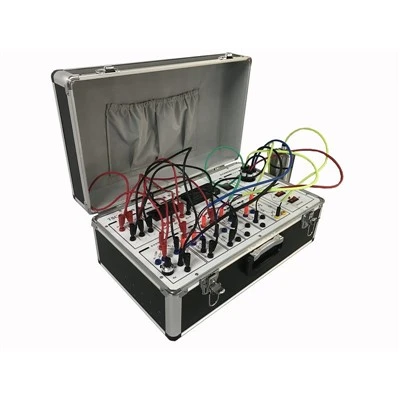
At our company, we are committed to providing high – quality electromagnetic instruments that minimize the impact of phase shift. Our team of engineers and technicians uses the latest technologies and techniques to design, manufacture, and calibrate our instruments to ensure optimal performance.
Mechanical instruments If you are in the market for electromagnetic instruments and want to learn more about how we can meet your specific needs, we encourage you to reach out to us. Our sales team is ready to engage in a detailed discussion about your requirements and provide you with the best solutions for your applications. We look forward to the opportunity to work with you and contribute to the success of your projects.
References
- Halliday, D., Resnick, R., & Walker, J. (2013). Fundamentals of Physics. Wiley.
- Hayt, W. H., & Kemmerly, J. E. (2001). Engineering Circuit Analysis. McGraw – Hill.
- Vlastimil, J. (2001). Electromagnetic Waves and Antennas. Prentice Hall.
Nanjing Longbow Scientific&Educational Instrument Co., Ltd.
As one of the most professional electromagnetic instruments manufacturers and suppliers in China, we’re featured by quality products and good service. Please rest assured to buy customized electromagnetic instruments from our factory. If you have any enquiry about pricelist, please feel free to email us.
Address: Room D, 22th floor, No.305, North Jiangdong Road, Nanjing,Jiangsu Province, China
E-mail: 79425380@qq.com
WebSite: https://www.lb-physics.com/
