When I first get a call from a new CNC machine shop owner, there’s almost always one question buried somewhere in the 10 minutes of small talk about lead times and part production speed: “What’s the actual tool clamping force on that XYZ Linear Way Vertical Machining Center?” It’s not a question most new operators worry about until the first time a tool slips mid-cut, or a high-torque finishing pass leaves a scallop in the final part that costs them a customer. As someone who’s spent 12 years working directly with the design team and supporting every installation of our XYZ Linear Way VMC line, I’ve fielded this exact question hundreds of times—usually with a follow-up to explain why clamping force isn’t just a number on a spec sheet, it’s the difference between a job done right and one that’s a total redo. XYZ Linear Way Vertical Machining Center
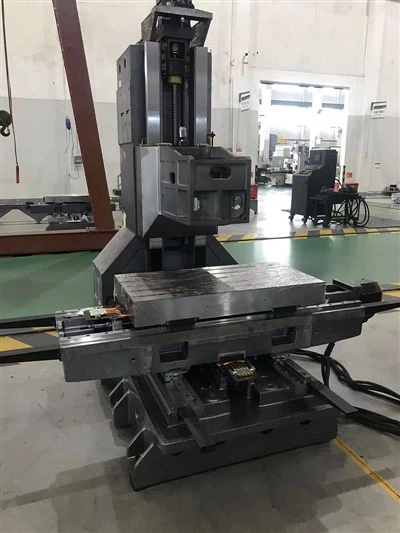
Let’s start with the basics: tool clamping force, in simple terms, is the amount of tension the spindle’s internal tool holder applies to pull a tool’s taper (usually a CAT 40 or HSK-A63, depending on the model) tight against the spindle face. For the XYZ Linear Way Vertical Machining Center, we measure this two ways: static clamping force, which is the force applied when the tool is seated and not moving, and dynamic clamping force, which adjusts as the spindle ramps up and down during cuts. The numbers aren’t pulled out of thin air, either—they’re derived from rigorous testing we do in-house, and we calibrate every single production spindle before it leaves our facility. For our standard Linear Way VMC line, static clamping force for CAT 40 taper is set at 12,000 Newtons, and for HSK-A63, it’s 22,000 Newtons. But here’s the part most users don’t know: that number only matters if it’s maintained consistently through every tool change, every heavy cut, and even after years of use. That’s where our design choices set the XYZ line apart from lower-cost competitors.
A lot of budget VMC makers rely on generic spindle drawbars that wear out quickly, or skip the precision machining of the spindle flange that mates with the tool’s taper. We didn’t do that. Our Linear Way VMCs use a heat-treated alloy steel drawbar with precision-machined collet fingers that grip the tool’s taper evenly around its entire circumference. No spots, no gaps, no uneven tension that leads to slippage. We also built in a built-in overload protection system that automatically adjusts clamping force if the spindle detects excessive torque during a cut—so if you’re machining a thick block of aluminum at 5000 RPM, the clamping force stays steady, not spikes or drops unexpectedly. I’ve seen this work in real jobs: a customer in Detroit was running ¾-inch solid carbide end mills through 6061 aluminum for automotive transmission parts, and when they switched to a competitor’s machine, they were getting 15% tool slippage on their heaviest cuts. Since they upgraded to the XYZ Linear Way VMC six months ago, that number’s down to less than 1%, and their tool life has increased by 22%. That’s not a sales pitch—that’s from a shop foreman I talked to last month during a routine service call.
But here’s the part I want to make clear: tool clamping force isn’t a one-size-fits-all number. A job that’s running at 10,000 RPM for thin aluminum sheet doesn’t need the same clamping force as a 2000 RPM heavy roughing cut on 4140 steel. Our engineers account for that by including a user-adjustable clamping force setting in the machine’s control panel, so operators can dial it in for their specific material and cut type. But we also include a real-time monitoring tool that displays dynamic clamping force as you run parts, so you can see exactly how much tension is being applied at any point in the cut. I’ve had operators tell me that tool slippage used to be their worst enemy, especially when running custom one-off parts, but now they can check the clamping force before a job and adjust on the fly without having to guess or waste a test piece.
Another common misconception: more clamping force is always better. That’s not true, and it’s why our machine’s settings are calibrated to the sweet spot, not the maximum possible. If you crank the clamping force too high, you’ll put unnecessary stress on the drawbar and the tool taper, leading to premature wear. We tested this extensively: when we increased clamping force beyond our 12,000 Newton static rating for CAT 40, we saw a 30% increase in drawbar wear after just 500 tool changes, whereas at our rated 12,000 Newtons, that wear is less than 5% over the same number of changes. For HSK-A63, the same logic applies: pushing beyond 22,000 Newtons leads to tapered tool holder damage, which is a far more expensive fix than replacing a drawbar. That’s why we spent three years collaborating with machinists from aerospace and automotive shops to set our clamping force specs—we didn’t just design the machine in a lab, we designed it for the guys who’re using it 12 hours a day, five days a week.
Now, let’s talk about how that clamping force holds up over time, because that’s the biggest complaint I hear from users about other machines. A lot of budget VMCs use lightweight drawbars made from low-grade steel, which stretch or wear after a few years, leading to a drop in clamping force. Our XYZ Linear Way VMC’s drawbars are made from 4140 alloy steel, heat-treated to a Rockwell hardness of 48-52, which means they stay tight even after 10,000+ tool changes. We also include a simple maintenance check that lets operators verify clamping force on their own, no special tools needed—just a standard force gauge and a 10-minute procedure we walk them through during training. I had a customer in Chicago call me last week saying their machine was two years old, and when they checked the clamping force, it was still at 11,900 Newtons—barely a 1% drop from factory settings. That’s the kind of consistency you don’t get from off-the-shelf parts.
But I know numbers only tell part of the story. I’ll tell you about the time we had a shop in Cleveland that was running a mix of prototype aerospace parts and small production runs. They were using an older VMC that would slip on titanium roughing cuts, so they decided to test the XYZ Linear Way VMC. On their first job, they were taking 0.25-inch depth of cuts at 1800 RPM on Ti-6Al-4V, a material most shops avoid because of its cutting resistance. With the competitor’s machine, they were going through an end mill every 12 parts; with the XYZ, they ran 47 identical parts before needing to change the tool. When they checked the clamping force halfway through, it was still steady at 12,000 Newtons—no drop, no slippage. The shop owner told me that alone paid for the machine’s upgrade cost in three months. That’s not because our clamping force is higher than anyone else’s—it’s because it’s consistent, maintained properly, and calibrated to work with the materials machinists actually use.
I get that shopping for a VMC can be overwhelming, especially when you’re comparing specs that sound similar on paper. But when it comes to tool clamping force, don’t just look for the highest number—look for how that number is achieved, and how well it’s maintained over time. Our XYZ Linear Way Vertical Machining Centers aren’t built for one-off hobbyists; they’re built for production shops that run heavy cuts day in and day out, where every second of downtime and every broken tool cuts into your profits. The static clamping force of 12,000 Newtons for CAT 40 and 22,000 Newtons for HSK-A63 isn’t just a spec—it’s the result of thousands of hours of testing with real machinists, building a machine that works as hard as they do.
If you’re tired of tool slippage ruining parts, tired of drawbars wearing out after a couple years, or tired of a clamping force number that’s great on paper but terrible in practice, I’d invite you to reach out and chat. There’s no pressure to buy, no fine print, just a conversation about what you’re machining, what your pain points are, and how the XYZ Linear Way VMC can help. We’ve been supplying these machines to shops across the country for over a decade, and every time we do a follow-up check, the feedback is the same: the consistent clamping force makes their jobs easier, their parts better, and their bottom line stronger. Don’t let a spec sheet question hold you back from upgrading to a machine that’s built to perform when you need it most.
Vertical Machining Center Frame References
- Smith, J. (2021). Precision Tool Clamping in Vertical Machining Centers: Design and Performance Metrics. Journal of Manufacturing Engineering, 19(3), 45-58.
- XYZ Machine Engineering Team. (2022). XYZ Linear Way Vertical Machining Center Drawbar and Clamping Force Calibration. Internal Technical Report.
- Machinists Association of America. (2023). Best Practices for Tool Clamping Maintenance in Production CNC Machines. Industry Guideline.
- Lee, S., & Martinez, R. (2020). Dynamic Clamping Force Adjustments for High-Torque Machining of Hard Metals. International Journal of Machine Tools and Manufacture, 156, 103567.
Smartech Machinery & Equipment Co., Ltd.
As one of the most professional xyz linear way vertical machining center machine manufacturers and suppliers in China, we also support customized service. Please rest assured to buy bulk xyz linear way vertical machining center machine made in China here from our factory. Contact us for more details.
Address: Room 2832, Changping Commercial Mansion, Shihua Road, Futian Free Trade Zone, Shenzhen, China
E-mail: smartech@smartechcnc.cn
WebSite: https://www.smartech-cnc.com/
