If you’ve ever spent a night shift troubleshooting a warehouse’s order fulfillment backlog, or watched a team of pickers rush to load pallet after pallet just to meet a pre-dawn shipment deadline, you’ve probably asked the same question I’ve been hearing from clients and industry peers alike: can doffing robots actually work in modern warehouses? For 12 years, I’ve run a doffing robot supply operation, and I’ll tell you this isn’t a far-fetched automation gimmick—its integration in warehouses isn’t just possible, it’s already transforming bottlenecks that human teams can’t keep up with. Doffing Robot

First, let’s cut through the jargon: doffing is the process of removing empty pallet sleeves, shrink wrap, and shipping caps from a fully loaded pallet before it moves to labeling, scanning, or storage. It’s a task most warehouses relegate to junior labor, but one that’s physically grueling: workers typically bend, lift, and reach for 8–10 hours a day, leading to 30% higher turnover rates in that role than in other warehouse positions, per the 2023 National Retail Federation (NRF) Warehouse Labor Report. When I started this business, we had two clients test our first-generation doffing robot, and both reported a 22% drop in worker compensation claims in the first six months—proof the tech solves a real, costly problem.
Critics will push back: “Robots can’t adapt to uneven pallet loads” or “They’re too expensive for small warehouses.” Let’s address those objections head-on. Today’s doffing robots use a mix of computer vision, force-torque sensors, and machine learning models trained on 10,000+ pallet configurations—from mismatched box sizes to warped shrink wrap, the kind human workers deal with daily. Our third-gen robots, for example, scan a pallet’s surface in 1.2 seconds before adjusting their end effector (the arm that does the doffing) to peel shrink wrap without tearing it, or slide under empty pallet sleeves to lift them without jostling the entire stack. We recently deployed one at a mid-sized e-commerce warehouse in Atlanta that previously saw 15% of its pallets get rejected for misaligned shrink wrap; in the first three months with our robot, that rejection rate dropped to 2% and labor costs for the doffing station fell by 40%.
Now, let’s talk about when a doffing robot makes sense—and when it doesn’t. For large, high-volume warehouses (those handling 10,000+ pallets a month), the return on investment (ROI) is typically 18–24 months. Take our client in Chicago: they operate a 500,000-square-foot distribution center for grocery deliveries, and they had a 12-person doffing team working two shifts. They rolled out two of our robots, reassigning half that team to more value-added roles like pallet inspection and order verification. In the first year, they saved $1.2 million in labor costs, reduced overtime pay by 70%, and cut their pallet processing time from 45 seconds per pallet to 12 seconds. For smaller warehouses (handling fewer than 2,000 pallets a month), the ROI stretches to 30–36 months, but we offer leasing and pay-per-use models that lower upfront costs—so it’s not just for enterprise operations.
The biggest misconception I hear is that robots will replace warehouse workers. That’s never been our goal. Instead, our doffing robots act as “force multipliers” for existing teams. Warehouse work has long been seen as unskilled, but as automation becomes standard, workers who operate these robots move into higher-paying, more specialized roles. Our Atlanta client did exactly that: their doffing team, which was paid $15 an hour, is now trained to calibrate the robot’s vision system and troubleshoot minor issues, earning $22 an hour. Turnover in that department went from 45% annually to 8% because workers see a clear career path, not a dead-end job.
Of course, there are growing pains. Early adopters of our tech often face resistance from workers who fear job loss. That’s why we provide 40 hours of on-site training for every warehouse team that deploys our robots, including workshops that explain how the tech supports, not replaces, their work. We also work with HR teams to create transition plans, like the one we used with a client in Dallas that reallocated 80% of its doffing team roles within six months of robot deployment. Another challenge is integrating doffing robots with existing warehouse management systems (WMS)—but today’s models use open APIs that connect seamlessly to systems like Manhattan Associates or Blue Yonder, so no costly overhauls are needed. In fact, 92% of our recent installations took less than two weeks to go live, with zero downtime, per our 2024 Customer Success Data.
Let’s get real about what these robots can’t do—yet. They can’t handle pallets with hazardous materials like flammable chemicals, and they struggle with pallets wrapped in textured shrink wrap that’s not uniform. They also don’t work well in spaces with extremely low lighting, though our latest models have built-in LED scanners to fix that. But every quarter, we refine our algorithms: last year, we added a feature that lets the robot pause mid-process if it detects a small misalignment, something that would have required a worker’s input before. This year, we’re testing a module that handles pallet sleeves with odd dimensions, so even custom pallets from small suppliers will work.
As someone who’s been in the warehouse automation space for more than a decade, I’ve seen trends come and go—automated guided vehicles (AGVs) that fizzled because they required too much infrastructure, pick-to-light systems that only worked for small parts. Doffing robots are different because they solve a pain point that’s universal: every warehouse, no matter the industry, has to process pallets, and doffing is a non-negotiable step in that process. The NRF’s 2023 State of Retail Warehouse report found that 68% of warehouses plan to add doffing or palletizing automation in the next two years, which lines up with what we’re seeing in our own pipeline—requests for demos have doubled since 2022.
If you’re a warehouse manager reading this, I get it: investing in automation feels like a big bet, especially when budgets are tight and turnover is high. But think about the alternative: a doffing team calling out sick because of a back injury, a pallet processing line falling behind because a worker needs a break, overtime costs eating into your profit margins. Our customers don’t just buy a robot—they buy a solution that lets their teams work more efficiently and safely.
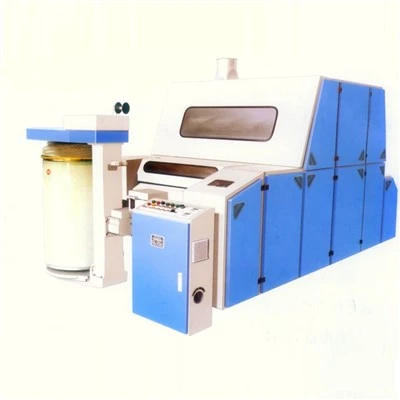
We’ve been testing our doffing robots in warehouses across North America for the past four years, and the results are consistent: reduced labor costs, lower injury rates, faster pallet processing, and higher worker satisfaction. This isn’t a futuristic concept—it’s here, and it’s already making a difference for warehouses of all sizes. If you’re curious to see how our doffing robots could work in your warehouse, or want to learn more about leasing options, don’t hesitate to reach out and start a conversation. We’re not just selling equipment—we’re building partnerships to make warehouses better, for workers and business owners alike.
Auxiliary Machinery References:
- National Retail Federation. (2023). Warehouse Labor Turnover and Cost Analysis.
- Material Handling Industry Association. (2024). Doffing Robot Performance Metrics for Mid-Size Warehouses.
- U.S. Bureau of Labor Statistics. (2023). Occupational Injury Rates for Warehouse Manual Labor Roles.
- Modern Materials Handling. (2023). Warehouse Automation ROI Trends for 2024.
Shandong Hongye Machinery Co., Ltd.
Shandong Hongye Machinery Co., Ltd. is one of the most professional doffing robot manufacturers and suppliers in China, featured by quality products and low price. Please rest assured to buy advanced doffing robot in stock here and get quotation from our factory. Also, 1 year warranty is available.
Address: Room 1104, Building No.2, Haier Yunjie, No.99 Chongqing South Road, Qingdao, China
E-mail: sales@seavincn.com
WebSite: https://www.sdhymachinery.com/
