If you’ve ever walked past a power substation on a city block, watched a cargo ship glide through a port, or relied on a hospital’s uninterrupted life support system, you’ve relied on a transformer. But most people picture the gray, boxy units that sit in those substations, doing the same work as thousands of identical models. Those are “standard transformers,” built for one specific job: stepping up or stepping down voltage for a general grid or commercial use. But if you’ve ever needed a transformer tailored to a one-of-a-kind application, one that has to withstand extreme cold in an Antarctic research station or fit into the tight hold of a specialized offshore construction vessel, that’s where we come in: as a global special transformer supplier. Let’s break down what a global special transformer actually is, why it matters, and why it’s not just a custom add-on—it’s the backbone of the world’s most critical, hard-to-reach infrastructure. Special Transformer
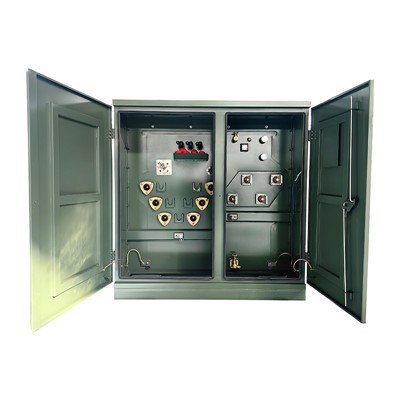
First, let’s get one thing straight: “special” doesn’t mean “fancy.” It means it’s designed for a requirement that a standard transformer can’t meet. Standard transformers follow strict, universal specifications: they’re built for moderate temperatures, operate at a single fixed voltage level, and are sized to fit the average footprint of a substation or factory. A special transformer? It’s engineered to solve a unique problem that standard units were never built to address. Think of it like this: a standard car is great for commuting to work, but a special transformer is the 4×4 that can drive across the Sahara, the amphibious truck that can cross a river, or the compact van that fits into a city’s narrow alleys. Each is built for a specific mission, not for the average driver.
Now, “global” is just as important as “special” here. A local special transformer supplier might be able to handle a one-off unit for a nearby mine, but a global supplier has the expertise to navigate the regulatory rules, climate challenges, and infrastructure gaps that come with serving projects on every continent. I’ve been in this industry for 18 years, and I’ve seen first-hand that a transformer that works perfectly in the Sonoran Desert will fail within six months in the permafrost of northern Canada. A global special transformer supplier doesn’t just sell a unit—it understands how to adapt that unit to the specific conditions of its end location, while also complying with local safety codes, environmental standards, and grid regulations. That’s the difference between a transformer that works and one that works for decades.
Let’s get specific about what makes a transformer “special,” because this is where most people get confused. There are a handful of core characteristics that set special transformers apart from their standard counterparts, and we deal with all of them every day.
First, custom voltage and power ratings. A standard transformer might top out at 500 kV, designed for large grid stations. But what if you’re powering a remote wind farm in Mongolia, where the grid isn’t built to handle standard voltage levels? Or what if you need a transformer for a medical imaging facility that requires extremely precise, stable voltage (within 0.1% tolerance) to avoid damaging a $20 million MRI machine? We recently built a 750 kVA special transformer for a cancer center in rural Kenya that had to step down the unstable, variable voltage from a local microgrid to the exact level needed for radiation therapy equipment. A standard transformer can’t deliver that level of precision—it’s built for general use. Special transformers are calibrated to match the exact voltage, power, and frequency requirements of the end user, no exceptions.
Second, extreme environmental resilience. This is where global experience makes all the difference. Let’s take two recent projects I helped oversee: one in Antarctica, and one in the North Sea. The Antarctic unit was for a year-round research station, where temperatures drop to -40°C in winter, and high winds carry snow that can accumulate on equipment. A standard transformer’s insulation would crack at that temperature, and its cooling system would freeze solid. So we engineered this unit with synthetic insulation rated for -60°C, a sealed, heated cooling system that only runs when needed, and a reinforced steel casing that can withstand wind speeds of 150 mph. Then, when we shipped it to McMurdo Station, we worked with the local logistics team to make sure it was transported and installed without damage—something a local supplier based in the U.S. couldn’t have done, because they didn’t have on-the-ground experience with Antarctic infrastructure. The North Sea transformer was even more unique: it had to be mounted on a floating offshore wind turbine, so it had to withstand constant vibration from the turbine, saltwater corrosion, and the tilt of the turbine as it moves in waves. We used a special marine-grade stainless steel casing, vibration-dampening mountings, and a hermetic seal to keep salt air out. A standard transformer would have rusted within a year in that environment.
Third, space and weight constraints. Special projects often don’t have the luxury of a large substation footprint. For example, we built a compact transformer for a mobile disaster response unit that’s deployed after earthquakes or hurricanes. The whole unit has to fit into a standard shipping container, so it can be flown or trucked to remote areas, and it has to power temporary hospitals, water treatment plants, and communication towers for up to 72 hours without needing maintenance. A standard transformer of that power rating would be twice the size and three times the weight—too big to fit in a shipping container. So we used a high-density core design, special compact insulation, and a lightweight aluminum casing to cut the size and weight by 60%, without sacrificing durability. That’s the kind of engineering that only comes from building hundreds of custom units, not turning off an assembly line.
Another key point: reliability in mission-critical applications. Most standard transformers have a 25 to 30 year lifespan, which is fine for a substation that can be taken offline for maintenance. But what if a transformer is powering a data center, a military base, or a remote mining operation that can’t afford downtime? We recently built a custom transformer for a lithium mine in Western Australia, where the mine runs 24/7, 365 days a year. If the transformer goes down, the whole mine shuts down, costing the operator $100,000 an hour in lost production. So we designed this unit with built-in monitoring sensors that track temperature, vibration, and oil quality in real time—we can check on it remotely from our office, before any problem becomes a failure. We also added a redundant cooling system, so if one cooling unit fails, another kicks in automatically. That level of built-in redundancy isn’t standard, because standard units don’t need it. But for special transformers, where downtime isn’t an option, it’s non-negotiable.
Now, let’s talk about what it means to be a global special transformer supplier, not just a local one. Last year, we had a client in Chile who needed a custom transformer for a lithium processing plant in the Atacama Desert, one of the driest places on Earth. The local grid had very high levels of dust and sand, which would clog the cooling system of a standard transformer, and the plant needed a power rating that was 20% higher than what was available in South America at the time. We didn’t just design the unit here in our headquarters in the U.S.—we worked with our local partner in Santiago, who helped us understand the exact dust levels, the local regulatory requirements, and the logistics of transporting it to the remote site (which is 100 miles from the nearest paved road). We also trained the local maintenance team on how to service the unit, so they wouldn’t have to fly in technicians from the U.S. every time something needed fixing. That’s the “global” part: we have a network of partners on every continent, so we can design, build, and support special transformers no matter where the project is. We don’t just ship a unit and walk away—we’re with our clients for the entire lifespan of the transformer, which can be 40 years or more.
I want to be clear: special transformers aren’t just for big projects like mines or research stations. We’ve built small special transformers for rural microgrids in India, powering villages that don’t have access to the national grid. Those units are built to withstand monsoon rains, high temperatures, and low maintenance capabilities, so villagers can keep their lights and refrigerators running for vaccines. We’ve built transformers for movie sets, where the unit has to be quiet enough not to disturb filming, and easily moved between locations. We’ve even built special transformers for amusement park rides, where the power has to be perfectly stable to keep roller coasters running smoothly. No job is too small or too unique, as long as it requires something that standard transformers can’t deliver.
Over the years, I’ve heard a lot of clients say, “Why can’t you just use a standard transformer?” Usually, the answer is that a standard transformer would be too big, too slow, too unreliable, or too expensive to operate for their specific use case. A few years ago, a client in Nigeria reached out to us because a standard transformer they’d bought from a big manufacturer had failed within a year. It was built for temperate climates, and Nigeria’s high humidity and constant temperature swings caused the insulation to break down. We built a special transformer for them with moisture-resistant insulation and a sealed casing, and it’s still running three years later. That’s the value of a special transformer: it’s not a one-size-fits-all solution, but it’s a solution that fits exactly what you need, where you need it.
As the world becomes more focused on remote energy projects, renewable energy, and critical infrastructure, the demand for special transformers is only going to grow. Wind farms in the middle of the ocean, solar projects in the Sahara, data centers in the Arctic—none of these can rely on standard grid equipment. They need transformers that are built for their unique challenges, and they need a supplier that can deliver that expertise no matter where they are.
At the end of the day, what we do isn’t just build transformers. We solve problems. We’ve solved the problem of powering a research station in Antarctica, keeping a mine in Australia running 24/7, and bringing power to villages in India. We’ve done it because we don’t just follow standard specs—we listen to our clients, understand their challenges, and engineer a solution that works for their specific needs.
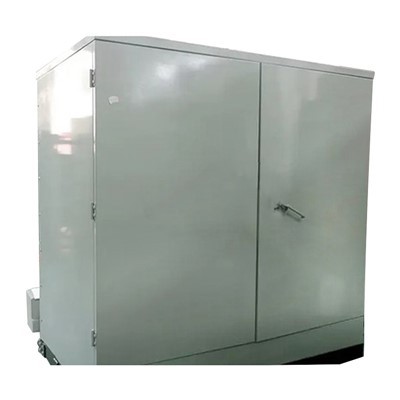
If you have a project where standard equipment won’t cut it, where you need something built for unique conditions, custom specifications, or mission-critical reliability, we’re here to help. We’ve worked on projects in over 30 countries, and we have the expertise, the network, and the global reach to deliver a special transformer that meets your exact requirements. Whether you’re a mine operator, a researcher, a medical facility, or a renewable energy developer, we can design, build, and support the transformer you need. Reach out to us to start a conversation about your project, and let’s turn your specific power challenge into a reliable, long-term solution.
Oil Immersed Transformer References
IEEE Transactions on Power Delivery. "Special Transformers: Design Considerations for Extreme Environments." 2021.
International Electrotechnical Commission (IEC). "Standard for Special Transformers for Mission-Critical Applications." IEC 60076-18, 2019.
Journal of Power Engineering. "Global Supply Chain Challenges for Custom Power Equipment in Remote Regions." 2022.
Nantong Yawei New Energy Technology Co., Ltd.
As one of the most professional special transformer manufacturers and suppliers in China, we’re featured by quality products and good service. Please rest assured to wholesale durable special transformer made in China here from our factory. Customized orders are welcome.
Address: Room 28-101, Building 27 and 28, No.333 Kaiyuan Avenue, Sunzhuang Subdistrict, Hai’an City, Nantong City, Jiangsu Province, China
E-mail: admin@nantongyawei.com
WebSite: https://www.nantongyawei.com/
