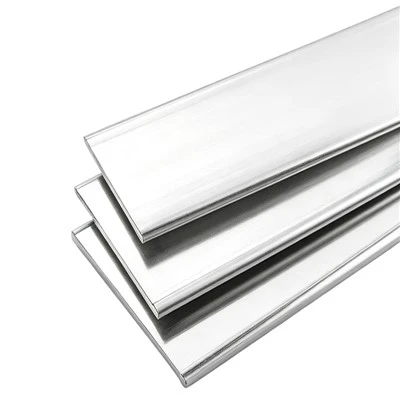
Copper Busbar Hey, if you’ve ever worked with electrical systems—whether you’re a DIY enthusiast wiring a new garage, a maintenance tech troubleshooting a commercial panel, or an engineer designing a power distribution setup—you’ve probably heard the term ampacity thrown around. And if you’ve dealt with copper busbars (chances are, you’ve seen them even if you didn’t know the name—those thick, solid copper strips carrying heavy current in switchgear, UPS units, or EV chargers?), you might’ve wondered: “What’s the actual ampacity of a copper busbar? Because if I get this wrong, I could be looking at overheating, fires, or a whole lot of downtime.” Let’s cut through the jargon here, since I’m right in the thick of being a copper busbar supplier, and I’ve had way too many people call me panicking because they miscalculated this. First off, ampacity isn’t just “how much current something can carry.” It’s the maximum amount of electrical current a component (in this case, a copper busbar) can handle continuously without exceeding a specified temperature limit—usually 105°C for most industrial and commercial setups, but sometimes 90°C for residential or lower-stakes stuff. And no, it’s not a one-size-fits-all number. I’ve seen guys pull a random “100A per square inch” stat off Google and get burned (pun intended) because they forgot all the variables that change that number. Let’s break down the big factors that actually matter for copper busbar ampacity, because that’s the part no one tells you in the random forum threads. First, the most obvious one: cross-sectional area. This is the total surface area of the copper’s cross-section—so if you have a flat busbar, it’s thickness times width. Copper is a great conductor, but thicker, wider strips have more metal to carry current, so they can handle more amps, right? Well, mostly. But that’s only the starting point. For example, a 1/4-inch thick, 2-inch wide copper busbar (so cross-sectional area is 0.5 square inches) doesn’t just do 50A or 100A. Let’s say we’re talking about a busbar installed in open air (way better for heat dissipation than a cramped enclosure) at an ambient temperature of 25°C (standard room temp). Using the standard NEC (National Electrical Code) guidelines, that busbar’s ampacity is around 380A. But if we cram that same exact busbar into a tight, enclosed electrical panel with no airflow, the ampacity drops to like 300A. Suddenly that 80A difference is huge—enough to make or break your whole system. Next up: ambient temperature. That’s the temperature of the air around the busbar. If you’re installing it in a plant that’s always 40°C (like a factory with heavy machinery running 24/7), the heat from the environment adds to the heat the busbar generates from carrying current. So you have to derate the ampacity. That same 0.5 square inch busbar I mentioned earlier? At 40°C ambient in open air, its ampacity drops to 350A—another 30A gone, no questions asked. If the ambient temp hits 50°C? Now we’re at 315A. See how fast that adds up? I had a customer last year who called me complaining that his busbars were overheating, and turns out he forgot his panel was in a non-air-conditioned warehouse that hit 45°C in the summer. He’d ordered the ampacity for 25°C, and by the time July rolled around, he was running 40A over the rated limit. Lesson learned. Third big one: installation and airflow. Busbars aren’t just floating in space. If they’re mounted flat against a metal surface (like the side of an electrical cabinet), that metal acts as a heat sink, which can help dissipate heat a little—wait, no, actually, if they’re sandwiched between other metal parts with no space for air to circulate, that traps heat. Or if there are multiple busbars stacked on top of each other in an enclosure, the ones on the bottom don’t get as much airflow as the top ones, so their ampacity is lower. Even the orientation matters. A busbar mounted horizontally with the wide side facing up has better airflow than one mounted vertically, right? Because hot air rises, so it can move away easier. I always tell my customers: if your busbar is going into a tight enclosure, don’t try to cram a smaller one to save space—you’ll just end up with overheating issues. And then there’s the type of copper itself. Yeah, not all copper is the same. We use C11000 electrolytic tough pitch (ETP) copper for all our busbars, because it’s 99.9% pure—super conductive, no impurities that would make it heat up more. Some cheaper suppliers will cut corners with lower-grade copper, which has higher electrical resistance, so it generates more heat for the same amount of current. That means their busbars have lower actual ampacity than advertised, even if they list the same cross-sectional area. I’ve had a customer compare our busbar specs to a competitor’s, and the same size bar had a 15A higher ampacity from us—turns out the other guy was using copper with 0.5% less purity. Tiny difference, big impact. Wait, what about if the busbar is coated? A lot of people ask us about tin-plated busbars. Tin is a common coating because it prevents corrosion, which is huge for busbars in coastal areas or humid environments. Does plating affect ampacity? Barely. Tin is a pretty good conductor, and the coating is super thin (usually a few microns), so it doesn’t add much resistance. The main thing is that corrosion on copper would increase resistance over time, so a tin-plated busbar will maintain its ampacity longer than a bare one in harsh conditions. I always recommend tin plating for outdoor or industrial applications, but if it’s just going inside a climate-controlled panel, bare works fine and saves a little cost. Now, let’s get to a quick example that’s actually useful, not just numbers. Let’s say you need a busbar for a small commercial UPS that has to carry 320A continuously. What do you need? If it’s going in open air, 25°C ambient: we already said that 0.5 sq in (1/4” x 2”) bar does ~380A, which is enough. But if that same UPS is going into a cramped panel, with an ambient temp of 40°C: that 0.5 sq in bar only does ~350A, which is too close for comfort. So you’d need to go up to a 5/16” thick x 2” wide bar, which is ~0.625 sq in, and that would do ~400A at 25°C, or ~370A at 40°C—plenty of headroom, no overheating. Headroom is another big one I always stress. You never want to run a busbar at 100% of its rated ampacity. Things get hot, components expand and contract, and there’s always a little fluctuation in current. I tell customers to size for 80% of the required current at maximum ambient temp. So if you need 320A, you size for 400A, which gives you a buffer. No need to overspend, but enough to avoid headaches. Wait, what about short-term current? Like, if your system has a 10-second surge of 500A? That’s not the same as continuous ampacity. The ampacity we’re talking about is continuous, so surges are a different calculation—you need to look at the busbar’s short-time current rating, which is about withstanding high current for a short period without melting or deforming. But that’s a separate thing; most of my customers are asking about continuous ampacity for regular operation. I get it, this stuff can feel overwhelming, especially if you’re not an electrical engineer. A lot of new electrical contractors or facility managers will just look at a spec sheet and grab the smallest busbar they can, trying to save money. But cutting corners here is a false economy. I had a customer a few years ago who bought cheap busbars from another supplier that were underrated. Within six months, two of them overheated and melted, taking out a section of his factory’s power system. He had to shut down operations for three days, which cost him way more than the extra cost of getting the right busbars from us. So why am I telling you all this? Because I’m not just here to sell you a busbar— I’m here to make sure you get the right one. When a customer calls me asking for ampacity info, I don’t just pull a number off a chart. I ask them: where’s the busbar going? What’s the ambient temp? Is it in an enclosure? Is it stacked with other busbars? What grade of copper do they need? All those questions change the ampacity, so I give them a tailored recommendation, not a generic stat. Let’s recap the key takeaways here, so you don’t have to dig through all this: 1. Ampacity of a copper busbar isn’t a fixed number—it depends on cross-sectional area, ambient temp, airflow/installation, and copper purity. 2. Bigger cross-sectional area = higher ampacity, but derate for high ambient temps and tight enclosures. 3. Pure copper (C11000) gives the highest ampacity; lower-grade copper cuts into that. 4. Always build in headroom—don’t run at 100% of rated ampacity. If you’re not sure what size busbar you need, don’t guess. Hit me up—whether you’re a contractor, engineer, or facility manager, I can walk you through the calculations, adjust for your specific setup, and make sure you get a busbar that’s safe, efficient, and long-lasting. No sales pitch nonsense, just straight talk about what works. Let’s make sure your electrical system doesn’t turn into a problem because of a miscalculated busbar. Call to chat about your project, I’m here to help. References: 1. National Electrical Code (NEC) Handbook, Article 310 (Conductor Ampacity) 2. Copper Development Association (CDA) “Copper Busbar Ampacity Calculations and Application Guide” 3. ASTM B152 Standard Specification for Copper Busbars, Strips, and Plates Copper Busbar
Zhejiang Jintai Copper Industry Co., Ltd.
We are one of the most professional copper busbar manufacturers and suppliers in China, also support customized service. With abundant experience, we warmly welcome you to wholesale bulk high quality copper busbar made in China here from our factory. For quotation, contact us now.
Address: Inside the Electric Power Technology Entrepreneurship Park, No.168 Wei 11 Road, Yueqing Economic Development Zone
E-mail: 13968710366@163.com
WebSite: https://www.jintaicopper.com/
